Some of my best days started as busted ahi plans. Here is how I find and work floating rubbish in Hawaii, from hunting speed between piles to the six inch lures and Aku Bones that go in the water first when I break down.

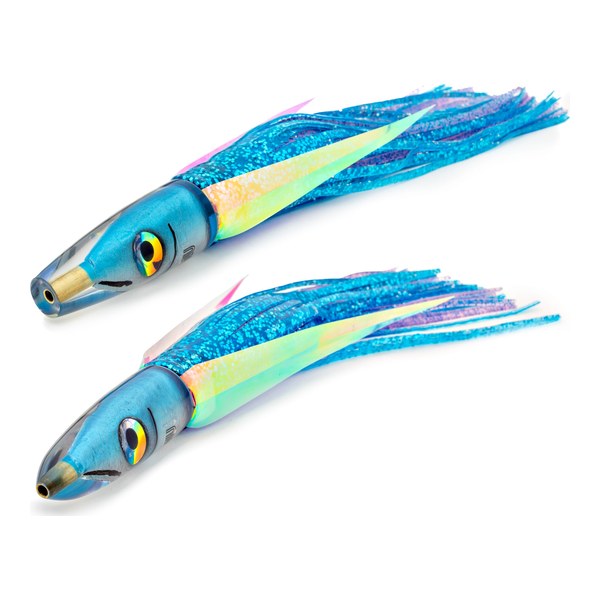
I run a 9-inch spread during ahi season, but the 7-inch and 6-inch lures earn their spot in the box for everything else. Here is how I use each size, when I reach for the Ali’i heavy series in rough water, and why I pull them all out once that 3-month ahi window opens.

We sell or give away the best cuts of every ahi, and the fisherman keeps the rest. Here is how I smoke the head, why the meat around the eyes smells like crab, and how what is left turns into a really good head soup.

I run all 9-inch lures during ahi season and nothing smaller, and the reason comes down to bycatch. Here's the spread I've been running for four years and why bullets and inverts stay where you put them in rough water.

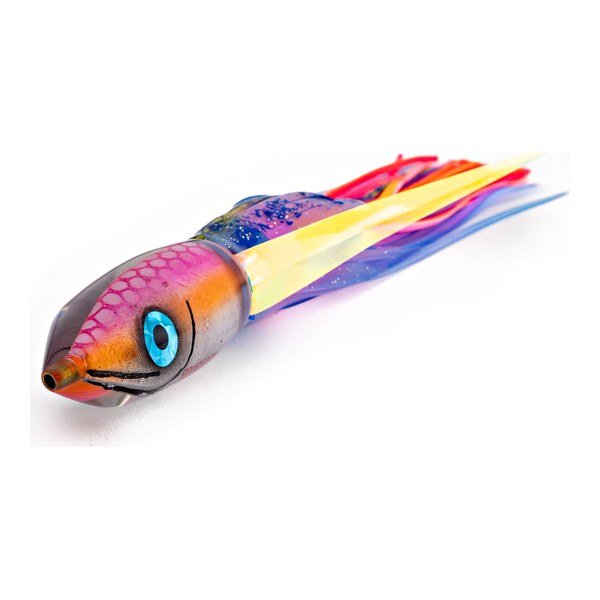
Four colors have earned a spot in our spread alongside the original five lures for ahi. Here are the exact skirt combinations and codes I run for the Electric Salmon, pink, black and blue, and blue dots.

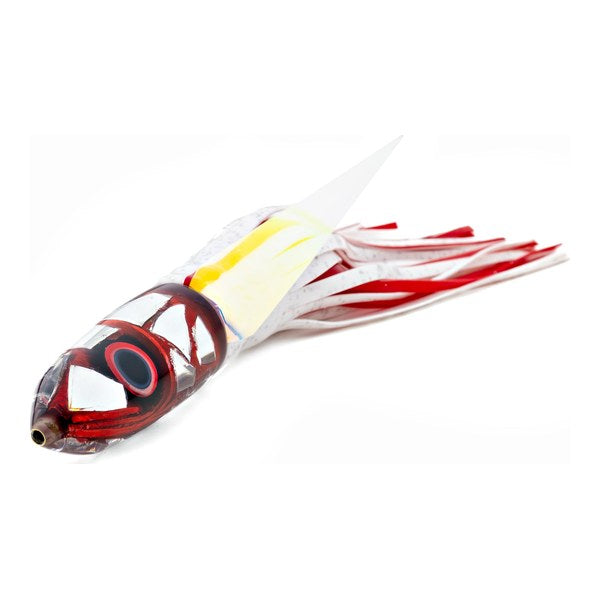
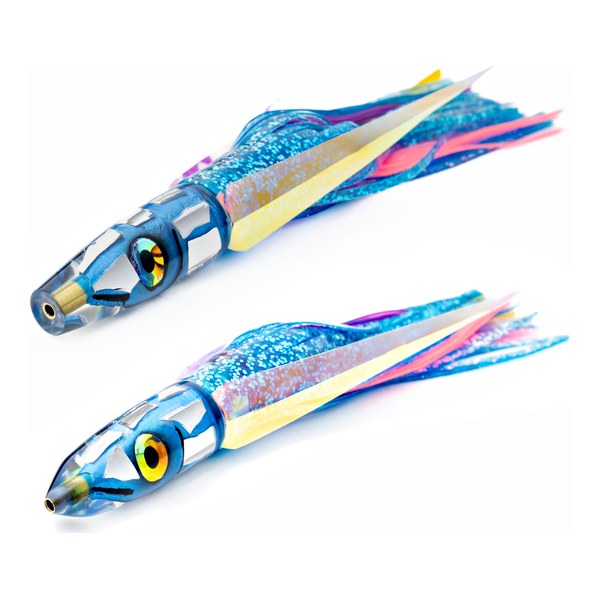
I walk you through how we build every lure at our shop in Hawaii, from the balanced lead insert and the star paper inlay to five passes of paint and the tuning box. It is the same process I showed on camera with the H-1 fish head and the 9 inch Ice Blue Moke Bullet.

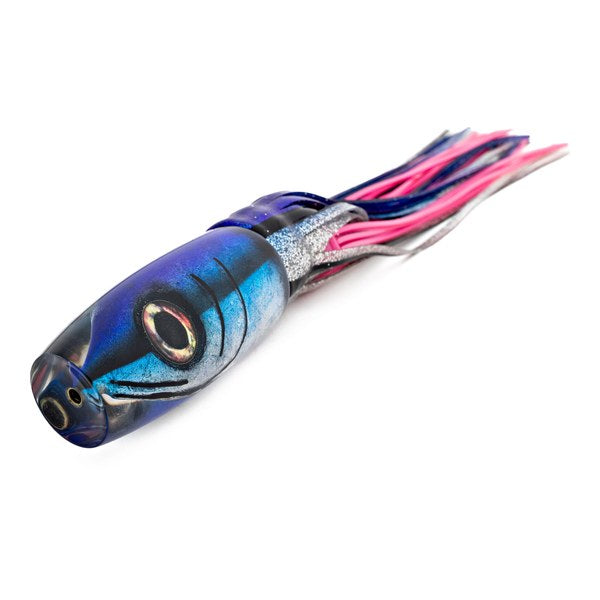
The blunt bullet is a shorter, fatter bullet head we designed to skitter along the surface. Here is when I run it, why I put two skirts on it instead of three, and the 7 inch skirt trick that squeezes more action out of it on a small boat.

I get asked all the time whether the trailer hook needs to hide inside the skirt. It does not, and there is a good reason: marlin swat the back of the lure first, and a hanging hook that flops at trolling speed looks like a fish tail. I also cover when to size up from 9/0 to 11/0 and 10/0 hooks based on skirt bulk.

I fish slower than most guides recommend, and almost all of my bites come on the downwind pass. Here is the zone system I use, including the exact speeds and the two-mile radius rule that keeps me in the fish.

I spend two to three days before every trip calling my network, logging positions, and picking a zone. The intel you gather before you leave the dock is what separates a consistent fisherman from someone who just goes looking.

My actual drag numbers for ahi, how I handle the boat after the bite, and why I tell my gaff man to aim for the pec fin instead of the head. This is the part of ahi fishing nobody writes down.

If you are just getting into trolling, the fastest way to start catching fish is to run smaller lures. Here is what I tell less experienced fishermen about lure size, leader, speed, and keeping the spread simple.

The exact lures I ran on our last ahi trips and why each one went out: how I match my line count to my crew, pick colors off the week's reports, and read the teeth marks an ahi leaves on a lure head.


These are the exact skirt combinations we run on our ahi lures, with the Yamashita and Yo-Zuri codes for each one. I also cover the two skirt shortcuts and the rigging catch you need to know before you run a flashabou skirt.

A wing gives the lure the wide flat profile of a flying fish, and that extra movement gets bit. Here are the exact sizes I cut for every lure we run, the relief cut most people skip, and how I tie wings on so the knot disappears.

Most of the fish we find offshore in Hawaii, we find because of birds. This is how I tell the flutter birds from the boss birds, which piles are worth working, and when to leave a pile alone.

Most guides pick leader by species. I pick it by lure size: 300 pound test on all the big lures, 130 or 200 on the small ones depending on the season, and every leader cut to three arm spans.

Skirts are the number one thing guys ask us about. Here is how we tie two and three skirt lures at the shop, the exact skirt codes behind our standard colors, and the trick for rebuilding a chomped skirt instead of throwing it away.

Single or double hooks on your trolling lure? We run doubles in most of our lures to cover the whole bite, front and back, but a single is cleaner, simpler, and safer at the boat. Here is how we rig for meat fishing in Hawaii and how to pick the right setup.

Join the Tsutomu crew for early drop alerts, fish reports, and tips from the water.
Drops sell out. Add your number and get a text on every drop and restock before Instagram or email finds out.
By providing your phone number, you agree to receive promotional and marketing messages, notifications, and customer service communications from Tsutomu Lures. Message and data rates may apply. Consent is not a condition of purchase. Message frequency varies. Text HELP for help. Text STOP to cancel. See terms, see Privacy Policy.
Here’s 15% off your first order. Tap the code to copy it, or shop now and it applies at checkout automatically.