If you just got a boat or you just got into fishing, your focus is probably on catching something. Most times when you are starting out, you do not want to go out for a whole day and come back with no fish. So this post is about the lures, leader, and habits I tell less experienced fishermen to start with, based on what actually works for us here in Hawaii.
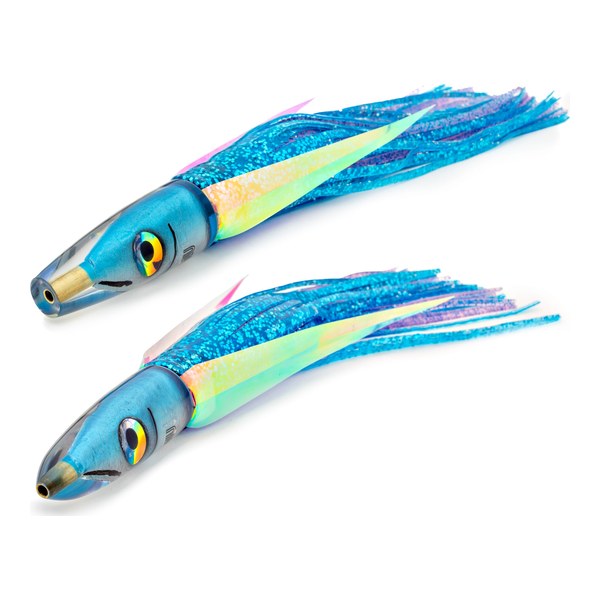
The smaller the lure, the more chances you have of getting a bite. If you look in even a big fish's stomach, like an ahi, a lot of times there is really small bait in it. So a small lure increases the range of fish you can catch. You can catch small aku with it, and you can also potentially catch a large ahi with it. I have a lot of guys who catch big ahi on small lures.
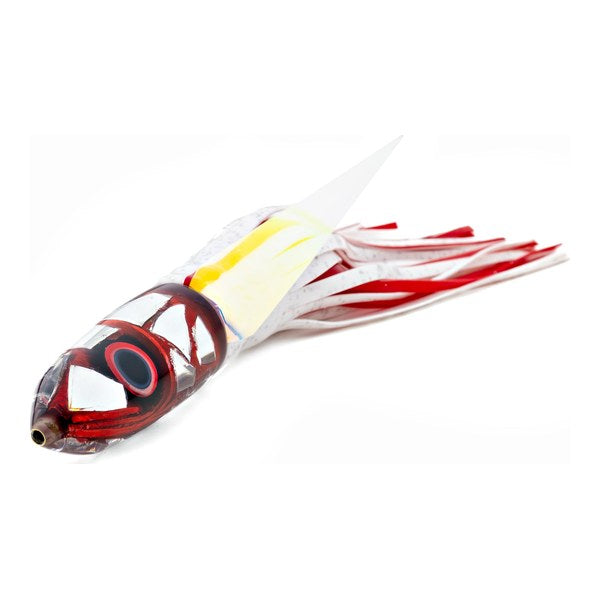
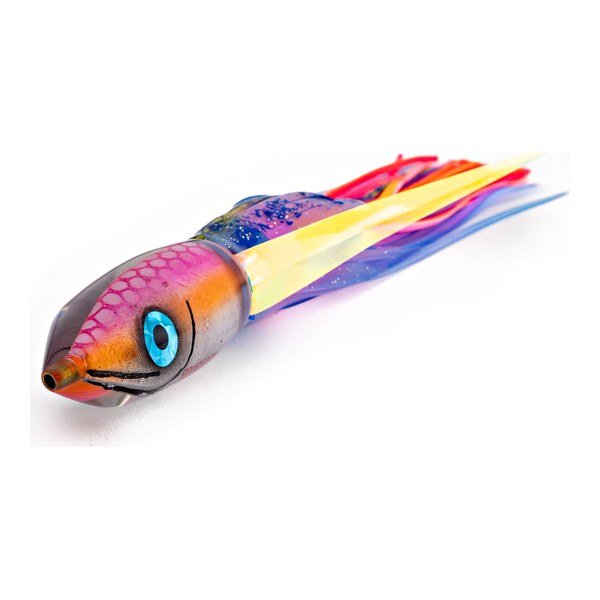
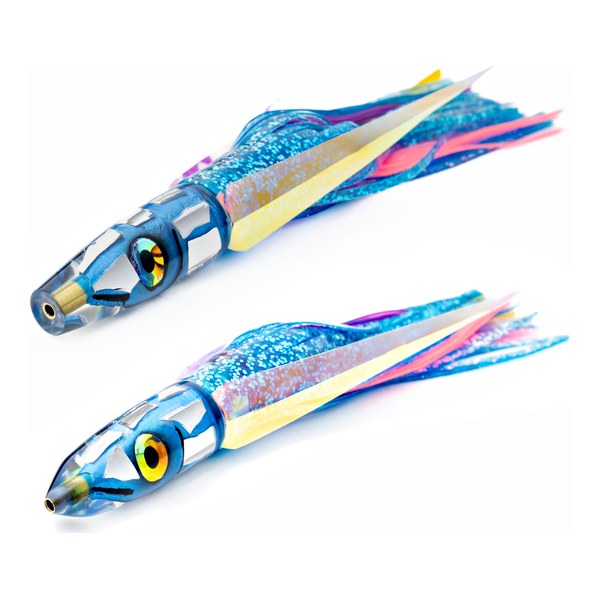
If you are just starting out, run a couple of 5 inch lures and maybe a 7 inch. Chrome heads will do well too. If you are running the ledge, I would run two 5 inch lures and a 7 inch or something like that. The overall thought is to run smaller baits so you get more chances of bites from both small and big fish. A lure like our 5 inch Aku Bone will basically catch you anything that swims, and the 6 inch Poke is in that same small, do everything class.
Here is the mistake I see the most. A lot of guys run light line on a small lure, say 130 pound or lighter. Then a big ahi grabs it, and you almost always lose that fish right at the boat, when you can actually see it. That is when you have the most pressure on the leader, and that is when the leader normally breaks. I cannot tell you how many stories I have heard of guys running their aku lures and losing a big ahi exactly like that.
This is what I run on small lures:
If you hook an ahi on 130 pound fluorocarbon you are going to have a hell of a time landing that fish. The 200 or 220 still gives you a fighting chance if a big one bites. The tradeoff is real though: the bigger leader will get you fewer bites on the aku. And to be honest, I use fluorocarbon when I am chasing aku even though I have not found that it helps you much with ahi. For more on the full leader program, see what I run on every lure.
Everybody's boat is different, so take note of what the white water is doing behind your own boat. Tunas typically do not like a dirty wash. Mahi and fish like that will bite a dirty wash for sure, which is why it is okay to go faster for them, but for whatever reason tunas like a cleaner wash and a slower speed.
For ono, 7 to 9 knots is fine. But when you are quartering up sea your wash gets a little dirty, and when you turn down sea the wash cleans up. Most times that is when you get the tuna bites. I fished with a guy on his 17 foot Boston Whaler who realized he had been going way too fast, 10 or 11 knots, and the one time he got a nice fish was when he slowed down. Take note of your own boat and adjust.
One more thing on small boats: for tuna fishing you do not need very much action out of the lure. If you are marlin fishing and you want the lure skating down the wave, then weight and action matter. Tunas do not really care.
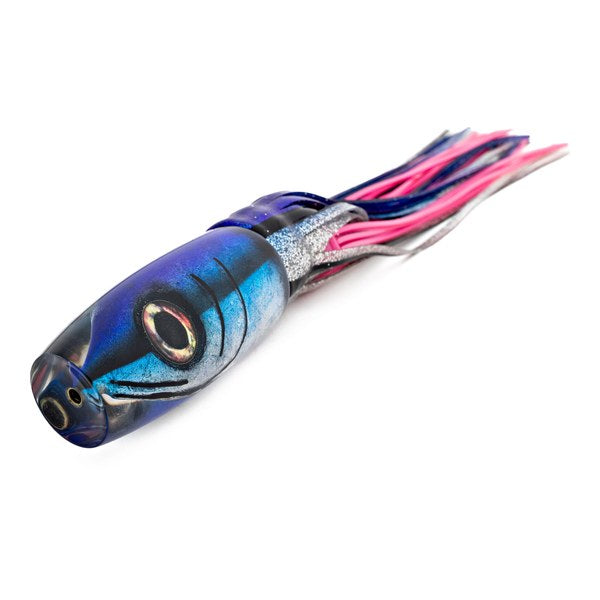
Bullets and inverts will keep you out of trouble, especially if you are starting out, and they will catch you pretty much everything you need. A lot of times I run a bullet on one corner and an invert on the other corner, and the same on the riggers. If the water gets real nice and you want a little more action, then throw a cut face lure or two out there.
The main thing when you are starting out is you do not want to be running a mixed up pattern back there with cut face stuff jumping all over the place, because a lot of us are fishing smaller boats and trying to pull five or six lines. You get a tangle and you might not even know about it. If you want the full rundown on head shapes, I wrote about bullets versus inverts and how I set a trolling spread.
I decide the night before what I am going to run, and I keep those lures out and ready in a tray. Whatever other stuff I am bringing stays in the bag. Most times, once I set my spread I do not change it. The only reason I go into my lure bag is if I need a backup or I want to run more of the same color. That makes your time on the water a lot more efficient.
Run small lures, two 5 inch and a 7 inch, so you get more bites from more kinds of fish. Do not pair them with light leader if there is any chance of ahi around; 200 to 220 pound fluorocarbon still gets bit and gives you a chance to land the big one. Slow down and keep your wash clean for tuna. Stick to bullets and inverts until you have your pattern figured out. And do your homework the night before so your time on the water goes to fishing, not digging through the bag.
Comments will be approved before showing up.

Some of my best days started as busted ahi plans. Here is how I find and work floating rubbish in Hawaii, from hunting speed between piles to the six inch lures and Aku Bones that go in the water first when I break down.

I run a 9-inch spread during ahi season, but the 7-inch and 6-inch lures earn their spot in the box for everything else. Here is how I use each size, when I reach for the Ali’i heavy series in rough water, and why I pull them all out once that 3-month ahi window opens.

We sell or give away the best cuts of every ahi, and the fisherman keeps the rest. Here is how I smoke the head, why the meat around the eyes smells like crab, and how what is left turns into a really good head soup.

Join the Tsutomu crew for early drop alerts, fish reports, and tips from the water.
Drops sell out. Add your number and get a text on every drop and restock before Instagram or email finds out.
By providing your phone number, you agree to receive promotional and marketing messages, notifications, and customer service communications from Tsutomu Lures. Message and data rates may apply. Consent is not a condition of purchase. Message frequency varies. Text HELP for help. Text STOP to cancel. See terms, see Privacy Policy.
Here’s 15% off your first order. Tap the code to copy it, or shop now and it applies at checkout automatically.