Most guys who are not catching ahi consistently have the same problem. They go to the harbor, hear the fish are biting, run to that spot, spend an hour there, do not see anything, and then drive to the next rumored spot. They spend the whole day running from one area to another and come home empty. I know because I did the same thing for years.
The fix is not a different lure. It is a different way of working the water once you are in the right area.
Before I start trolling, I mark my zone. If a friend told me fish were biting at 12 miles on a 30-degree bearing, I put a GPS waypoint right on that position and label it exactly that: 12 miles, 30 degrees. Or if I come out and I see two boats hooked up in the same area, I mark that position right away.
From that mark, I work a two-mile radius. That is my playing field. I do not stretch beyond three miles from the mark. Here is why: if I drift three miles one direction, I now have a six-mile gap between the two ends of my pattern. That is too much ground to cover, and I am spending more time traveling than actually fishing.
The fish are not spread across the whole ocean. They are concentrated in a zone, and if I keep pulling lures through that zone, I am going to get bit eventually. If I leave, I am not going to get bit.
Once I am in the zone, 70 to 80 percent of my bites come on the downsea run. That is not a guess. That is what I have seen trip after trip, year after year. Most other trolling guides tell you to hold six to nine knots no matter what. I fish slower than that when I am working downwind, and there is a reason.
When you are heading downwind with the swell, your engine is running quieter and the white water behind your boat is cleaner. The fish can see the pattern better. You can also feel the swells pushing the boat forward slightly, and when that happens the lures momentarily speed up and then slow down again. That motion looks like a baitfish moving erratically. It is basically free jigging action you are getting without doing anything extra.
When I am heading back upwind to restart the pattern, I run at 8.5 to 9 knots. I am not fishing on that return pass. I am just repositioning. I might do some S-turns on the way down to cover a longer track, but the intent is simple: slow down heading downwind, cover the zone, get the lures in front of the fish in the best conditions.
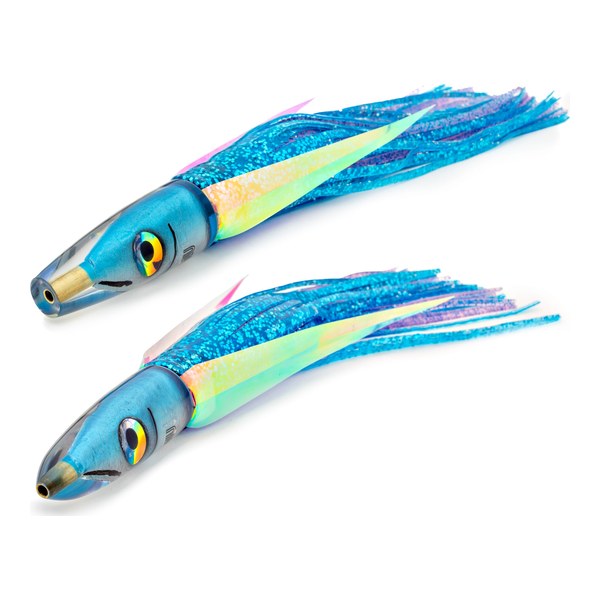
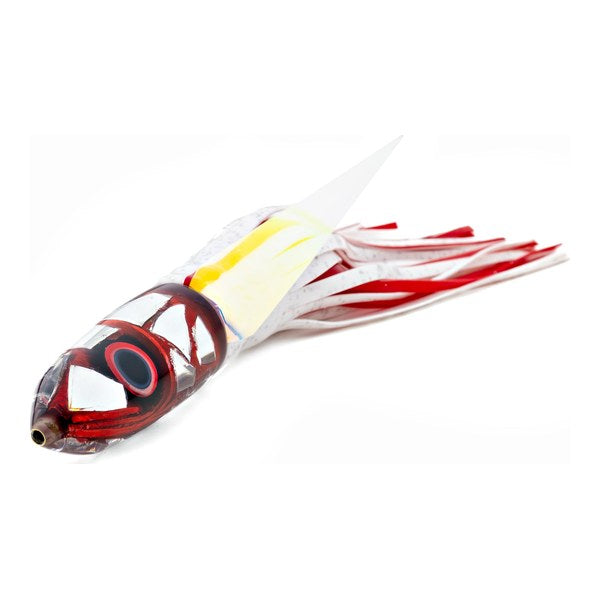
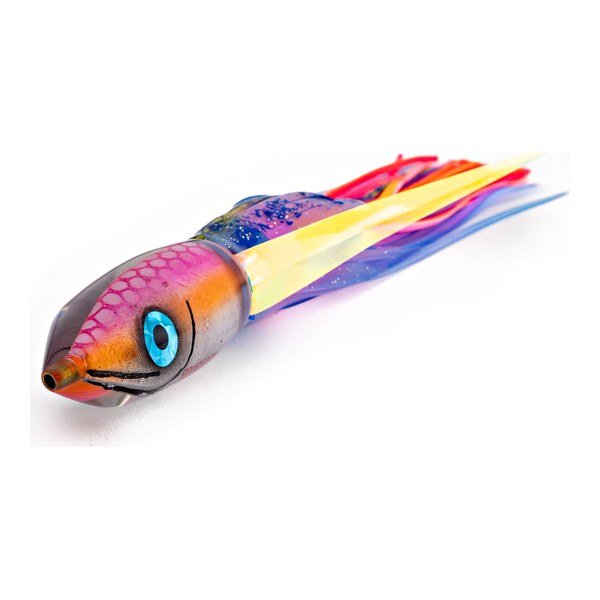
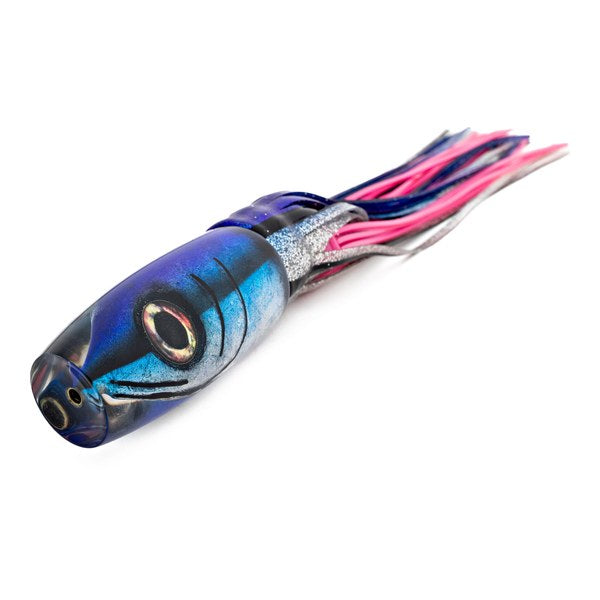
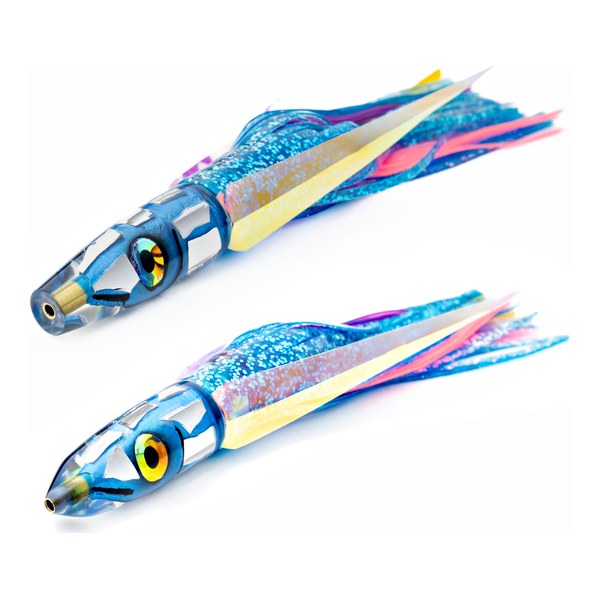
On the downwind pass, I run anywhere from 4.5 to 6 knots depending on conditions. When it is calm I am closer to 4.5 or 5. When there is a little more texture and the swell is helping push me, I might bump it up toward 6. The goal is a clean, controlled run where the lures are swimming the way they are supposed to swim. At these speeds, our standard 9 inch Moke bullets stay in the water and work the way I need them to at ahi season depths.
A lot of guys think you need to go faster to cover more ground. What I have found is that slowing down and working a smaller area more thoroughly catches more fish than racing around.
One of the biggest mistakes I see is guys leaving their zone to chase a bird pile they can see three or four miles away. Sometimes those bird piles are worth checking. Most of the time they are not.
Here is what I look for. An aku pile keeps moving. It tracks in one direction with the current and keeps going. If you chase it, you are going to keep chasing it, and pretty soon you are miles from your zone.
An ahi pile holds. It will pop up in one area, sit down, pop up again in roughly the same spot, sit down again. If I see a pile that is staying in an area and surfacing repeatedly, that is worth noting. If it is inside my two-mile radius, I will work toward it and fish through it. If it is outside the zone, I mark the direction and keep it in mind, but I do not abandon my playing field for it unless I have genuinely run out of options.
The first summer Keola fished with me, we came out on a day when two boats hooked up early right in front of Waianae Harbor, about eight miles out. By 10 in the morning, the water had gone flat calm, no birds, no visible marks, nothing obvious. Most of the boats that had been in the area left to look for something else.
We stayed. We just kept mowing the zone back and forth, marking bait on the sonar, waiting. A big charter I knew came back out around 1 in the afternoon after dropping off his morning customers, ran into the same area, and hooked up again. By 3:30, on a downwind pass, our rigger came down and we stuck an ahi.
Keola said afterward, if he had been on his own he would have left by 10 and never come back. That is how most guys fish. The fish were there. They just were not biting yet.
If the zone has given you reason to be there, stay in it. The ahi will bite when they are ready. Your job is to be in the right spot when they do.
Comments will be approved before showing up.

Some of my best days started as busted ahi plans. Here is how I find and work floating rubbish in Hawaii, from hunting speed between piles to the six inch lures and Aku Bones that go in the water first when I break down.

I run a 9-inch spread during ahi season, but the 7-inch and 6-inch lures earn their spot in the box for everything else. Here is how I use each size, when I reach for the Ali’i heavy series in rough water, and why I pull them all out once that 3-month ahi window opens.

We sell or give away the best cuts of every ahi, and the fisherman keeps the rest. Here is how I smoke the head, why the meat around the eyes smells like crab, and how what is left turns into a really good head soup.

Join the Tsutomu crew for early drop alerts, fish reports, and tips from the water.
Drops sell out. Add your number and get a text on every drop and restock before Instagram or email finds out.
By providing your phone number, you agree to receive promotional and marketing messages, notifications, and customer service communications from Tsutomu Lures. Message and data rates may apply. Consent is not a condition of purchase. Message frequency varies. Text HELP for help. Text STOP to cancel. See terms, see Privacy Policy.
Here’s 15% off your first order. Tap the code to copy it, or shop now and it applies at checkout automatically.