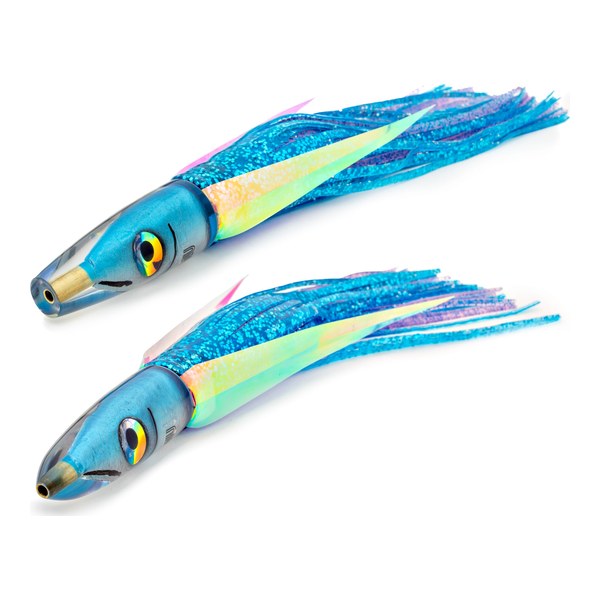
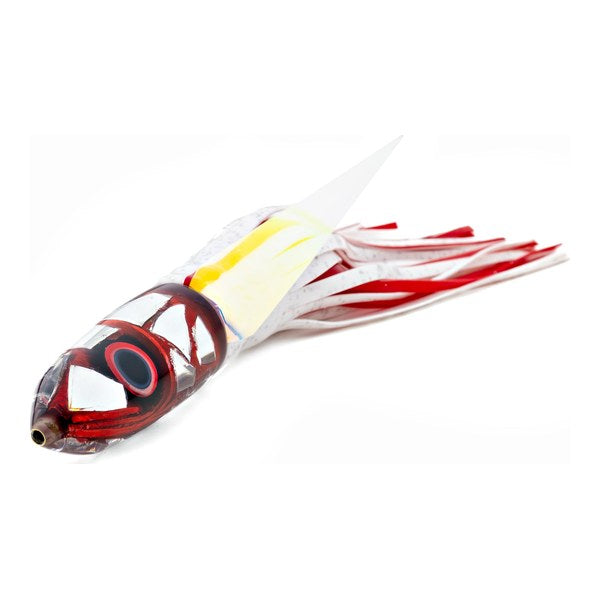
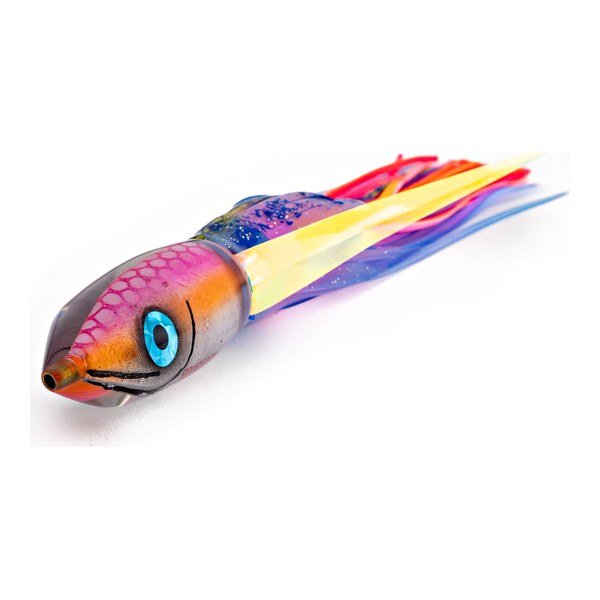
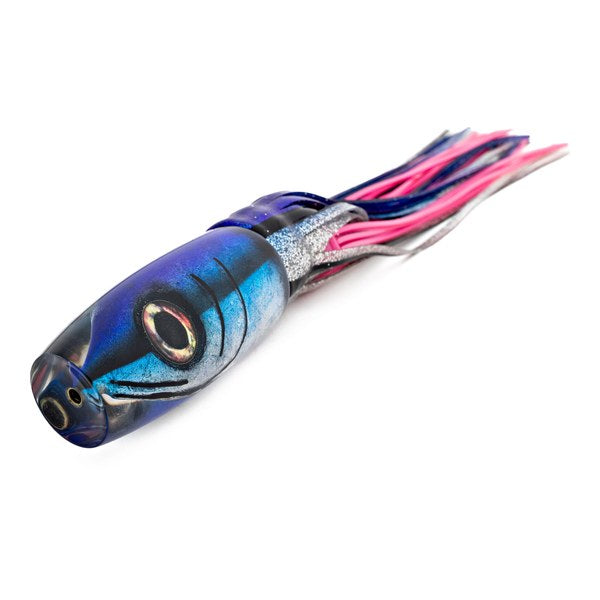
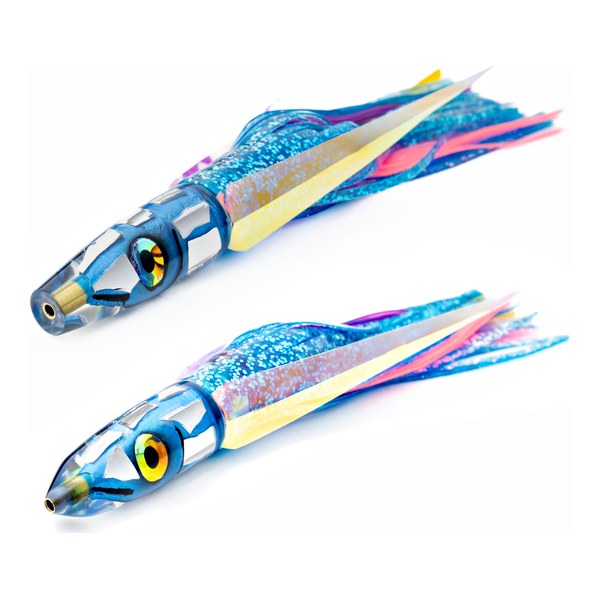
Skirts are the number one thing guys ask us about. What colors to run, what numbers to buy, how to tie them so the lure still swims right. I did a whole run of skirting videos on our YouTube channel over the years, and this post pulls the main lessons from those videos into one place.
You have to imagine the water flowing over the head. The goal is one seamless line from the back of the head to the back of the tail. If you have a big bulge behind the head, the water is hitting that bump and it changes the way the lure runs. If the skirt sinks down behind the front step, same problem in the other direction.
Will a fish still bite a lumpy skirt job? Probably. I have seen guys with skirts ballooning way over the head and the lure still gets bit. But the lure runs the way it was designed when the skirt job is clean, and a clean skirt job is not hard once you know the few tricks below.
Every lure head has a head, a neck, and shoulders. The skirt has a neck too, the spot where it pinches down. The whole game is putting the neck of the skirt into the neck of the head. Line the skirt up so the pinch lands right at the inside of the back step, mark it, and cut. I always cut twice: a first rough cut, then a second one to even it off so the edge is straight. A straight cut matters because that edge is what butts up against the head and shows in the finished lure.
This is the standard setup on most of our lures: an underskirt and a top skirt.
A lot of guys tie both skirts on backwards and flip everything over. We do it differently on purpose: tying the bottom skirt right side up and only flipping the top one makes it a lot easier to line everything up and adjust as you go.
If your finished skirts are all different lengths, trim them to whatever you like. If you order skirts from us and they show up a little long, that is on purpose. We leave them long so you can cut them to the length you want.
Certain colors and certain brands are way thicker than others. A thin skirt like a Mavis you can flip over to fill the drop between the back step and the front step, and it lays down seamless. But a skirt with three or four colors layered on top of each other is thick, and if you flip that extra material over you get a big hump behind the head. The lure looks like a hunchback and it will not run the way it should.
The fix is simple: instead of flipping the excess over, flip the skirt back, take small scissors, and trim that ring of extra material off. The thick material fills the drop on its own and you keep the streamline. Check the bottom side of the lure against the top. If the bottom traces straight and the top raises up, that hump is the skirt, not your tying.
Yamashita skirts run wide at the back, and sometimes you get a hip where the skirt will not settle. Every Yamashita skirt has one ugly looking leg where the skirt was joined at the factory. Start there: count two legs over, put a small relief cut in, skip two legs, another relief cut, and work your way around the bulge. Those little cuts let the skirt relax and lay down clean.
A triple skirt is the same process with one extra rule: trim the excess off each layer before the next one goes on. After the first skirt is tied, cut the flipped-over material off using the step as your guide. Tie the middle skirt, trim it the same way using the first skirt as your guide. Then the top skirt goes on inside out from the front like always, and all three layers sit at one level.
One tip for running triple skirted lures: if the legs start tangling around your hook after a few runs, find the leg that keeps wrapping and just pull it off. The lure will run better and you will not miss it.
I get asked for the exact skirt codes all the time, so here they are, the same ones I gave out in the skirt colors video:
Now the important part: do not get too caught up chasing exact codes. Pink is pink, orange is orange, and blue salmon is blue salmon. I really do not think a fish is going to come charging up to your lure and at the last second say, oh, that is not Mavis, that is bubblegum pink. If you cannot find the exact skirt, find something close and go fishing. The codes are a baseline so you know you are on the right track.
Two situations. First, if your triple skirt combos keep tangling, drop to a two skirt setup with a combined color like the creamsicle and you get basically the same effect with fewer legs to wrap. Second, if the onos keep wrecking your skirts, a two skirt lure costs you less every time one gets chomped.
Everybody has a box of skirts that got bit, or that you untied and could not bring yourself to throw away. When an ono takes half the legs off a lure, you can build a new underskirt out of the survivors.
Open the damaged skirt up flat and cut out the sections where the legs are still good, two legs at a time, keeping the cuts square. Then take superglue in gel form, the gel stays where you put it, and tack each section around the head right at the notch where a skirt would normally tie. Five to ten seconds a piece. Keep the sections even side to side, use the eye of the lure as your reference point, and make sure the legs hang straight. Then tie over everything with wax line like a normal skirt job and trim the excess. This is basically how the marlin guys do their vinyl skirts.
Use just enough glue to hold the sections for tying. If you glob it on, the next re-skirt job on that head is going to be a mess.
Done right, you cannot tell there is not a complete skirt underneath. It saves you money, and if you are on an outer island where skirts are hard to come by, it keeps you fishing. You can also invent underskirt combos that do not exist on any card at the store, which is half the fun.
Reverse the process. Get a hook, stick it into the knot, and pick the knot apart. Take the wax line off, put coconut oil on the inside, and the skirt slides off. The top skirt is the trickier one; the bottom comes off easy. Save what you take off. It goes in the box for the underskirt trick above.
A skirted trolling lure is a system: the head does the swimming, and the skirt job decides whether the water lets it. Keep the line from the back of the head to the tail seamless, put the neck in the neck, trim thick skirts instead of flipping them, and do not be precious about exact color codes. That is ninety percent of what the guys at the shop do every day.
If you want to see any of this done on camera, the skirting videos are all on our YouTube channel. And every lure on tsutomulures.com ships skirted by hand exactly this way. Related reading: how we rig single and double hooks and choosing between a bullet and an invert head.
Comments will be approved before showing up.

Some of my best days started as busted ahi plans. Here is how I find and work floating rubbish in Hawaii, from hunting speed between piles to the six inch lures and Aku Bones that go in the water first when I break down.

I run a 9-inch spread during ahi season, but the 7-inch and 6-inch lures earn their spot in the box for everything else. Here is how I use each size, when I reach for the Ali’i heavy series in rough water, and why I pull them all out once that 3-month ahi window opens.

We sell or give away the best cuts of every ahi, and the fisherman keeps the rest. Here is how I smoke the head, why the meat around the eyes smells like crab, and how what is left turns into a really good head soup.

Join the Tsutomu crew for early drop alerts, fish reports, and tips from the water.
Drops sell out. Add your number and get a text on every drop and restock before Instagram or email finds out.
By providing your phone number, you agree to receive promotional and marketing messages, notifications, and customer service communications from Tsutomu Lures. Message and data rates may apply. Consent is not a condition of purchase. Message frequency varies. Text HELP for help. Text STOP to cancel. See terms, see Privacy Policy.
Here’s 15% off your first order. Tap the code to copy it, or shop now and it applies at checkout automatically.