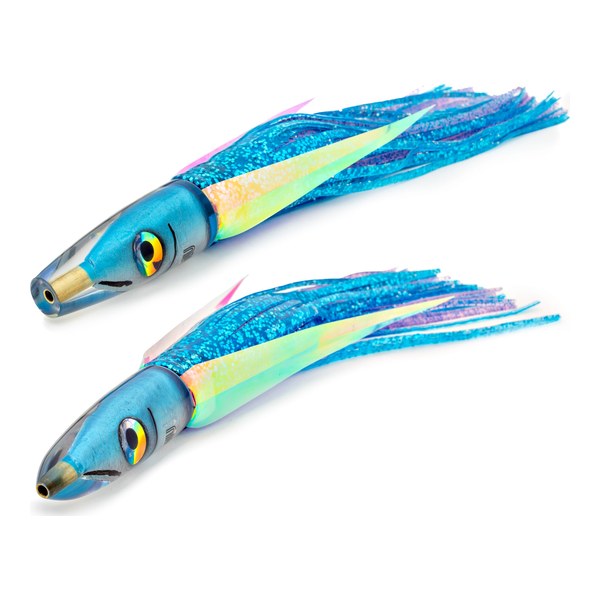
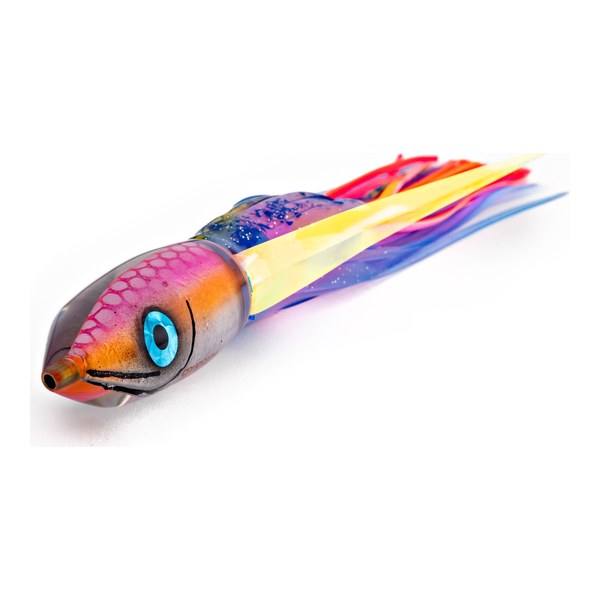
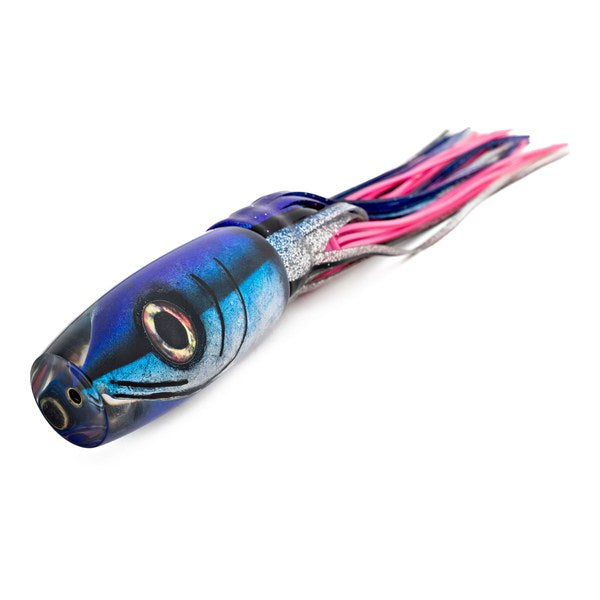
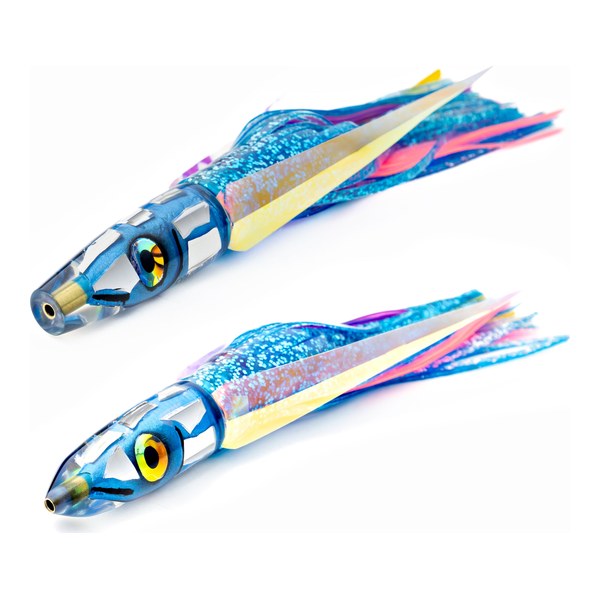
A lot of guys ask me why my ahi spread looks the same every time. Same general sizes, same head shapes, same positions. When they find out I don't run a single 7-inch lure during ahi season, they think I'm leaving bites on the table. I'm not.
When I was fishing charter boats, we ran 7-inch and 8-inch lures all the time. The goal on a charter is to get your clients bites and get fish on the deck. Small lures get more action. They'll catch mahi, smaller tuna, aku, whatever is willing to eat. For a customer who wants to see the rod go, that makes sense.
For my own fishing, the goal is different. I'm not out there to see a bite. I'm out there to catch an ahi.
Here's the scenario I'm trying to avoid. You're in the zone. Birds are working, boats are hooked up around you, everything is saying there are ahi in front of you. Your outrigger fires. The line screams. You clear the other lures, get ready, and then the run stops short and you realize it's a big aku.
The aku is a fine fish. But in that moment, when you've been reading the pile and waiting for the right angle, having your spread hijacked by bycatch is genuinely deflating. A 9-inch lure will still catch aku if a big one wants it badly enough, but you're not going out of your way to invite them. The 7-inch is an open invitation.
I would rather come home with nothing than come home with something other than ahi. That might sound extreme, but it's where my head is when I leave the harbor. If something else bites my 9-inch lure, fine. But I don't want to be optimizing my spread for fish I'm not chasing.
I run this spread on our 24-foot Skipjack: two long riggers, two corners, and one or two flat lines. That's five or six lures total, all 9-inch.
If you're running a long center as well, add one more lure there and shift everything else up one position. The pattern stays the same, just extended.
| Position | Lure |
|---|---|
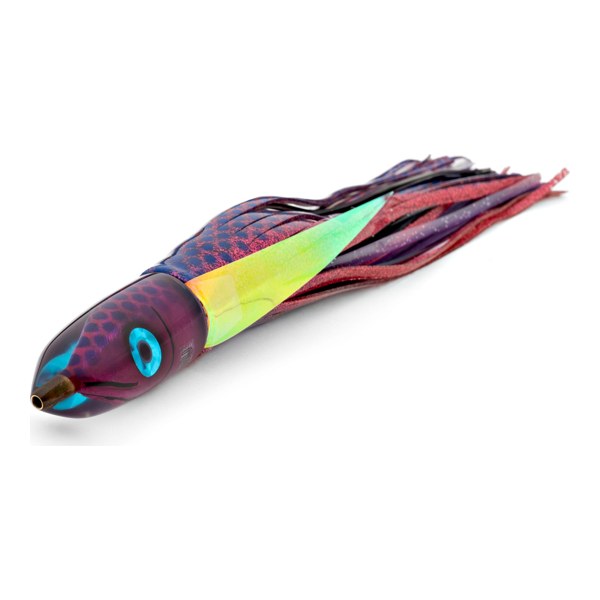
| Long rigger (port) | 9 inch Moke Bullet, purple |
| Long rigger (starboard) | 9 inch Moke Bullet, Milky (clear, black spots over purple) |
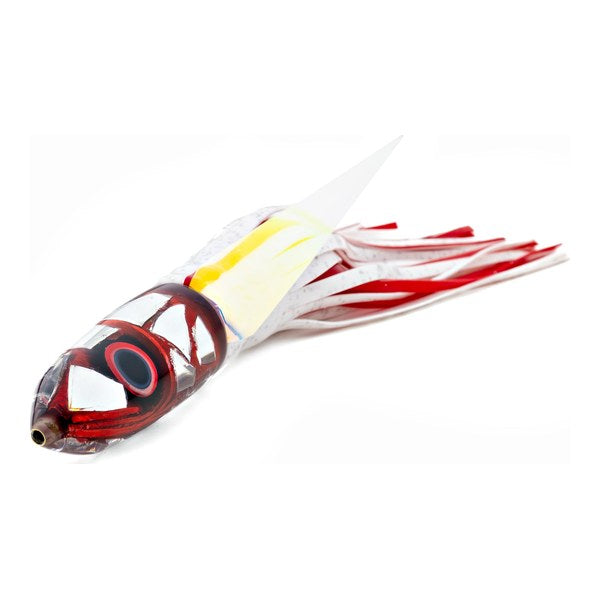
| Corner (port) | 9 inch Invert |
| Corner (starboard) | 9 inch Invert, Ice Blue |
| Flat line | 9 inch Bullet, black |
These are the colors I have been running for three or four years now. We experiment a little, but when I leave the harbor in the morning this is the first string I put out. Purple and Milky on the long riggers. Inverts on the corners. Black on the flat line.
I keep a backup of each. If you lose your number-one lure during the season, you want an identical replacement that can go straight back out without you thinking about it.
The reason I run almost entirely bullets and inverts comes down to one thing: rough water.
In the conditions we fish off Oahu, it gets choppy. When it gets choppy, certain head shapes want to wander. They'll swing out of position, tangle each other, and you end up spending half your morning managing your spread instead of watching what's in front of you.
Bullets and inverts stay where you put them. On a rough day, I set the pattern and then I can put my attention on what matters: reading the birds, watching the current lines, looking for signs of fish. I'm not babysitting lures. That's the real reason I run them.
One thing that surprises people: most of my lures don't have hooks in them.
I keep my first-string lures rigged and ready. Backups stay on the boat as bare heads, no hooks, no leaders. What I do keep on the boat is a coil of line, a set of double hooks, crimps, and a crimper. If I lose a lure during a bite and need to replace it fast, I can rig a bare head right there in the cockpit and have it back in the water in a few minutes.
If you think about it, keeping every lure in your collection pre-rigged means seventy to one hundred dollars or more in hooks alone, depending on how many lures you're carrying. Keep a first string rigged, keep everything else ready to rig, and carry your tools. That's what works for us.
I know there are guys out there chasing the hot new color every season. That's not my approach. The five colors I've described here have caught ahi for us consistently enough that I'm not looking to reinvent the wheel.
Purple. Milky. An invert color that's been producing. Ice blue. Black. If you want to try something different, do it on one of your corner positions where it's easy to swap out. But I'd run these five before I tried anything else.
Whatever you run, stick to 9-inch if you're serious about targeting ahi specifically. Leave the smaller sizes for days when you're happy to take whatever's eating.
Comments will be approved before showing up.

I use two different skirting techniques depending on the material because thick and thin skirts behave differently at the fold point. In this post I cover the ring trim technique for thick skirts, why I use coconut oil as a lubricant, and the front skirt positioning that keeps both layers opening correctly.


The calendar says ahi season in Hawaii starts in June, but the last few years the fish have been showing up as early as January and March. Here is how I get the boat, the leaders, and the lure box ready before they arrive.

Join the Tsutomu crew for early drop alerts, fish reports, and tips from the water.
Drops sell out. Add your number and get a text on every drop and restock before Instagram or email finds out.
By providing your phone number, you agree to receive promotional and marketing messages, notifications, and customer service communications from Tsutomu Lures. Message and data rates may apply. Consent is not a condition of purchase. Message frequency varies. Text HELP for help. Text STOP to cancel. See terms, see Privacy Policy.
Here’s 15% off your first order. Tap the code to copy it, or shop now and it applies at checkout automatically.