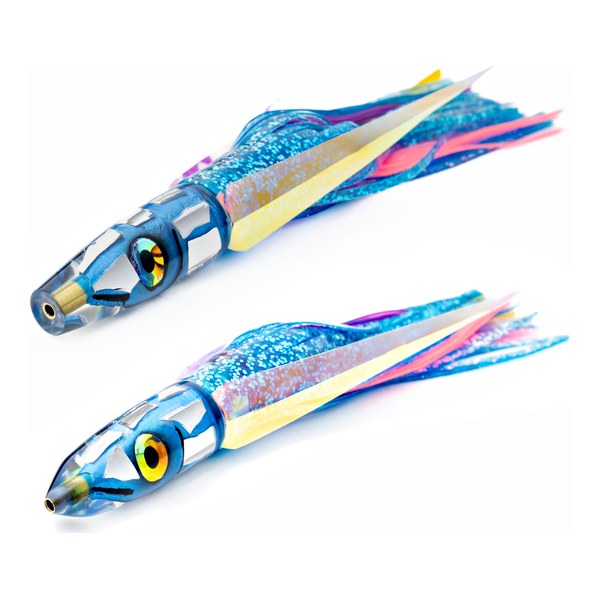
I get asked all the time what we actually pull behind the boat, so I want to start showing you what was in my lure bag on real trips. Back in the day, right before social media, guys would put the lures away and hide them before they even came back into the harbor. So if nothing else, this should be fun for all of us. I am always testing and tweaking stuff, so what is in the bag now is our solid baseline colors adjusted a little each season.
On the last trip we caught our ahi, the weather report said it was going to be bumpy, and I was basically fishing by myself. Josh only films on our trips, so the fishing is on me and whoever else comes. Because of that I ran four lines instead of my usual spread. When I have a good crew I run six lines. Shorthanded on a rough day, three or four is the honest number.
If you are running five or six poles without an experienced crew, you are going to run into problems the moment fish actually bite. That day we took a double, and one side came off on its own. If we had taken a four bagger out there shorthanded, everything would have gotten tangled and we probably would have lost most of the fish. Fewer clean lines beat more lines you cannot manage.
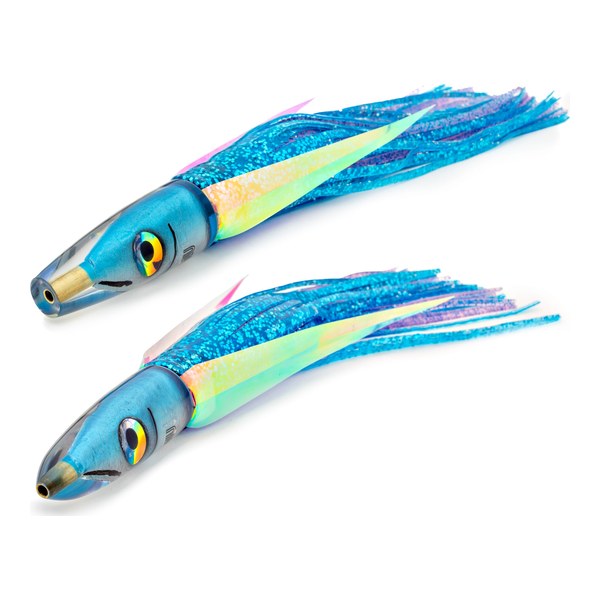
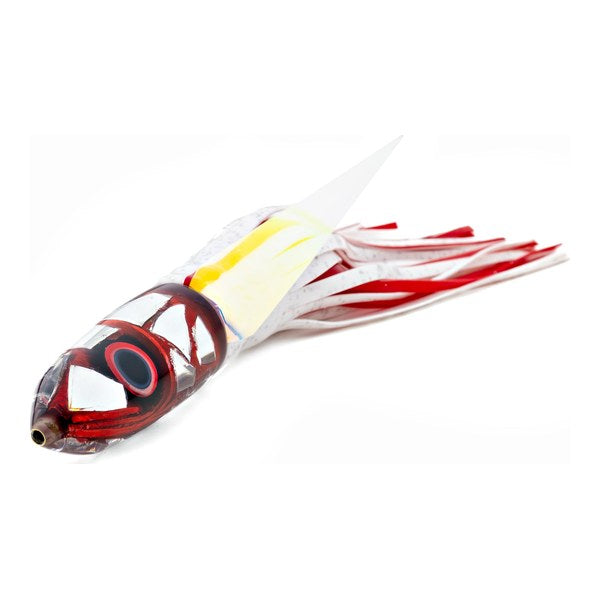
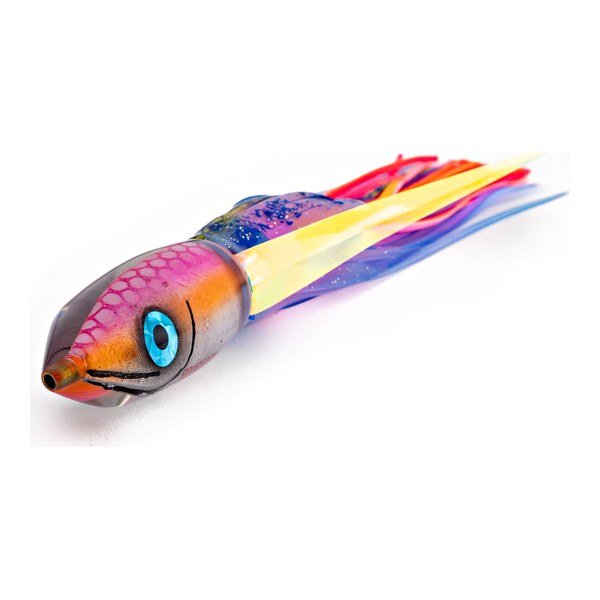
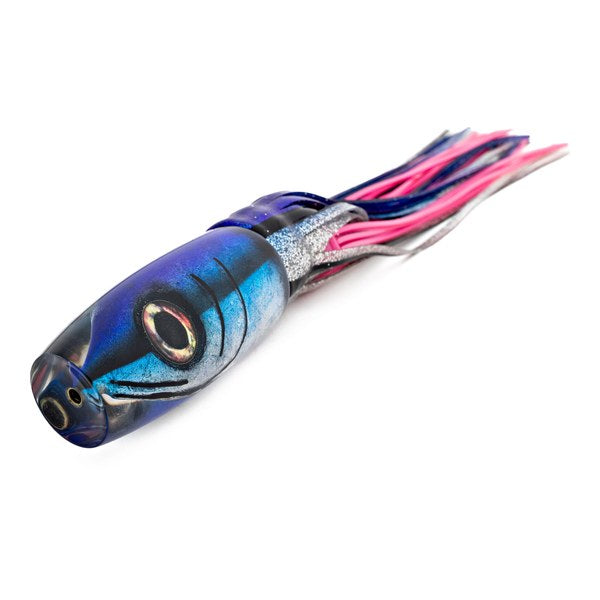
I do not pick colors at random. Leading up to that trip, the word on the coconut wireless was purple silver, a lot of milky reports, and enough guys catching on blue salmon that it counted as a pattern. That report is why these four lures went out:
Both skirts on that lure are Yo-Zuri skirts. The cap skirt is the salmon, and the code on that one is SPL-1. The underskirt is the pink we call a purple Mavis. There is a really bright pink Mavis and a more purplish pink one, and this is the purplish one, code B1S. The head is a purplish black that matches that skirt combo really well. If you want that exact recipe, it has worked for us, so feel free to give it a try. I broke down how I layer and match skirts, with all the codes I run, in the skirt combinations post.
On another recent trip, we caught our ahi on an H1 bullet in a test silver dot color I painted before the version on the website. The more useful lesson from that day was on the lure itself. We took what I thought was a blind strike in cloudy weather, and I was about to leave the area. Before we moved, I had the guys crank the lure in so I could double check it, and there were teeth marks in the head.
Look at the gaps between the teeth marks. Wide, even spacing like that is a pretty telltale sign of an ahi bite. About the only other fish that would leave marks with that spacing is a really big mahimahi. The marks also tend to be way up in the front of the lure, and sometimes you will see them run from the tip all the way down through the wings. Because of those marks we stayed, and when the sun came up I saw the porpoise. Most likely our fish came out of that porpoise pile the whole time; we just could not see it in the clouds.
That same trip, all my lures were 9 inch and 9 inch plus sizes, and that was on purpose. There were big aku around, and my friend was catching real nice ones, 20 to 25 pounders. Early in the season you are often bouncing from bird pile to bird pile, and the ahi are not always in the pile itself; they are in between the piles or coming up to one. You can be catching aku while the guy next to you is catching ahi. Running bigger lures like a 9 inch Moke bullet is my way of fishing past the aku for the bigger bite.
How I was taught to work a pile: if you are the first boat there, make one or two nice passes around the outskirts and see if anything comes up. If not, turn the boat and make one pass right through the middle of the birds. We call that the U pass. If nothing happens, move on to the next pile. Three passes is pushing it for me, and you do not run the U pass if another boat is working the pile with you. I covered how to tell aku birds from ahi birds in the reading birds post.
The bag changes a little every trip, but the process stays the same: match your line count to your crew, pick colors off the week's reports, and check your lures after every strike. That is what was in my bag on those trips, and why each lure was there.
Comments will be approved before showing up.

Some of my best days started as busted ahi plans. Here is how I find and work floating rubbish in Hawaii, from hunting speed between piles to the six inch lures and Aku Bones that go in the water first when I break down.

I run a 9-inch spread during ahi season, but the 7-inch and 6-inch lures earn their spot in the box for everything else. Here is how I use each size, when I reach for the Ali’i heavy series in rough water, and why I pull them all out once that 3-month ahi window opens.

We sell or give away the best cuts of every ahi, and the fisherman keeps the rest. Here is how I smoke the head, why the meat around the eyes smells like crab, and how what is left turns into a really good head soup.

Join the Tsutomu crew for early drop alerts, fish reports, and tips from the water.
Drops sell out. Add your number and get a text on every drop and restock before Instagram or email finds out.
By providing your phone number, you agree to receive promotional and marketing messages, notifications, and customer service communications from Tsutomu Lures. Message and data rates may apply. Consent is not a condition of purchase. Message frequency varies. Text HELP for help. Text STOP to cancel. See terms, see Privacy Policy.
Here’s 15% off your first order. Tap the code to copy it, or shop now and it applies at checkout automatically.