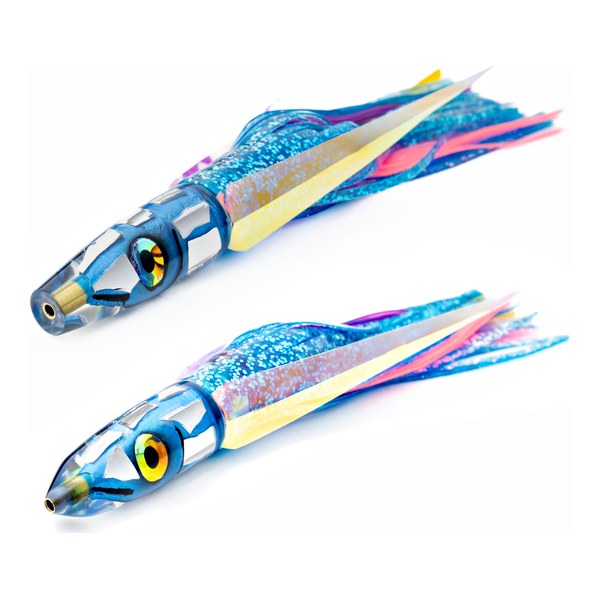
The question I get more than any other is some version of "what is your best lure for catching ahi?" And I almost always answer that question with a question. Are you going out there to catch only ahi, and taking the chance of coming home with nothing else? Because for most guys the honest answer is no. You catch ahi, but you also want the mahi, the ono, whatever comes up in the spread.
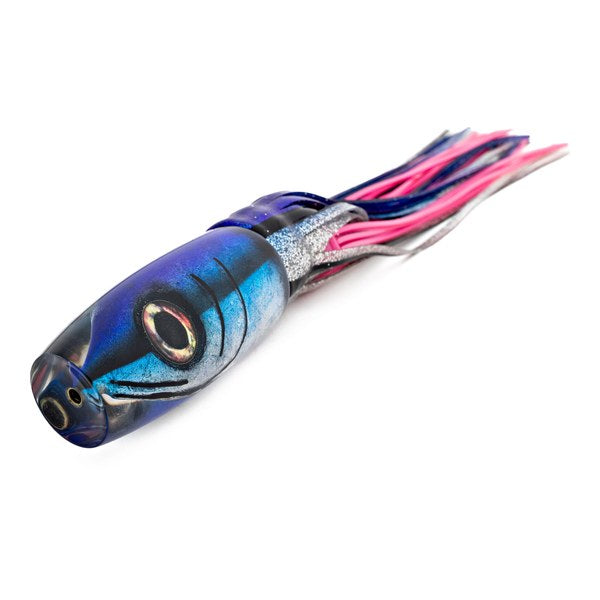
So here is how I think about it. Lures are tools. Screwdrivers and hammers. Or if you are a golfer, you carry a bag full of clubs because every situation can call for a different one. Can you get away with a hammer where the job calls for a screwdriver? Sometimes yes, sometimes no. The head shape is what decides which tool you are holding.
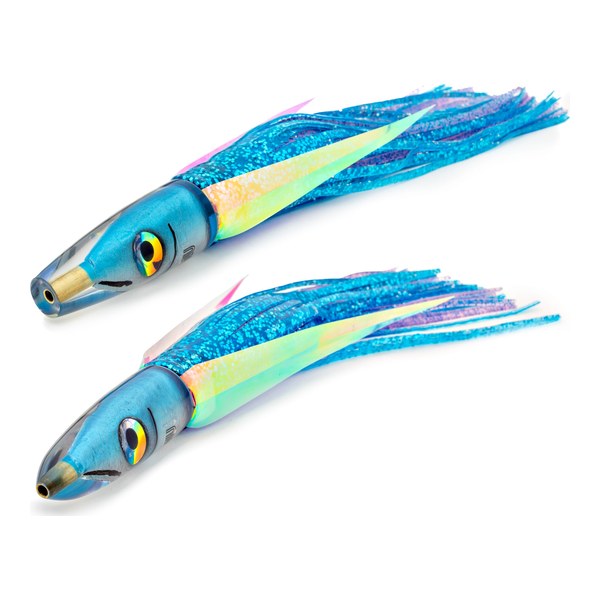
The bullet is the easiest lure in the box to run. It does not much matter where you put it, front of the wave or back. It is not going to tangle your gear. Put it in the water, get it in the general spot, and let the lure do the work.
The bullets I like stay in the water for the most part, then come up, do a skittery S-turn, and slide back under. And if you are thinking specifically about tunas, consider that basically all the old school Japanese feathers are bullet shapes. A cedar plug is another old lure, and that is a bullet shape too. That shape has been catching tuna since before any of us were doing this.
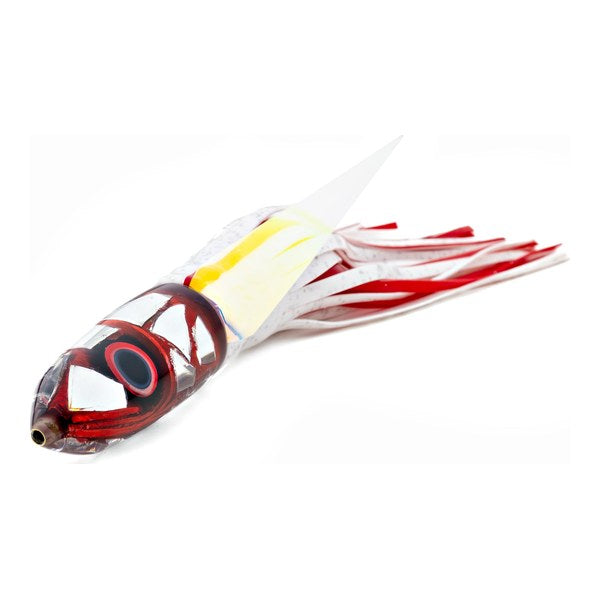
The invert is the bullet's straight-running cousin. That really blunt head makes the lure run a lot straighter than a bullet. Where a bullet works side to side, an invert goes straight up and down. You get more pop and more smoke out of it, and it will get down and stay down longer than a bullet will.
Like the bullet, this is a shape I would run in pretty much any situation.
A lot of days my spread starts with a bullet on one corner and an invert on the other. Or a bullet on one rigger and an invert on the other, and vice versa the next day. These two lures will keep you out of trouble, especially if you are starting out, and they will catch you pretty much everything you need.
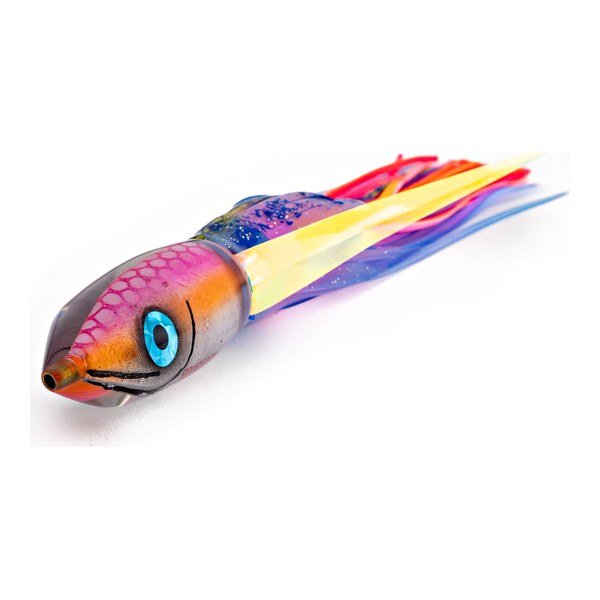
A cut face lure will splash, churn, zig, and zag a lot more than the other two. When the water starts to get nicer and I want a little more action out there, I will put a cut face or two in the spread.
Here is the thing about a cut face. It might not get bit as much as your other lures. But as the boat drives by, the fish are most likely looking at your boat, and the action of the cut face draws their attention into the rest of your lures. A lot of times the lure the fish actually bites is not the lure it saw first. So think of the cut face as a teaser with hooks in it. And if you are seeing a lot of surface action, more action in the spread is usually the right call.
Some days you want something smaller. Some days you want something bigger and heavier. Some days you want more action, some days less. And some days you want multiples of the same style, in the same color or different colors.
Just make sure your lure box is well stocked, so when the day shows you what it is, you have the right tool for it.
Want the full spec-sheet rundown of every head shape and where each one runs best? Read Trolling Lure Head Shapes Explained: How to Choose the Right One.
If your box is missing one of these shapes, you can see everything we pour in the lures collection.
Comments will be approved before showing up.

Some of my best days started as busted ahi plans. Here is how I find and work floating rubbish in Hawaii, from hunting speed between piles to the six inch lures and Aku Bones that go in the water first when I break down.

I run a 9-inch spread during ahi season, but the 7-inch and 6-inch lures earn their spot in the box for everything else. Here is how I use each size, when I reach for the Ali’i heavy series in rough water, and why I pull them all out once that 3-month ahi window opens.

We sell or give away the best cuts of every ahi, and the fisherman keeps the rest. Here is how I smoke the head, why the meat around the eyes smells like crab, and how what is left turns into a really good head soup.

Join the Tsutomu crew for early drop alerts, fish reports, and tips from the water.
Drops sell out. Add your number and get a text on every drop and restock before Instagram or email finds out.
By providing your phone number, you agree to receive promotional and marketing messages, notifications, and customer service communications from Tsutomu Lures. Message and data rates may apply. Consent is not a condition of purchase. Message frequency varies. Text HELP for help. Text STOP to cancel. See terms, see Privacy Policy.
Here’s 15% off your first order. Tap the code to copy it, or shop now and it applies at checkout automatically.