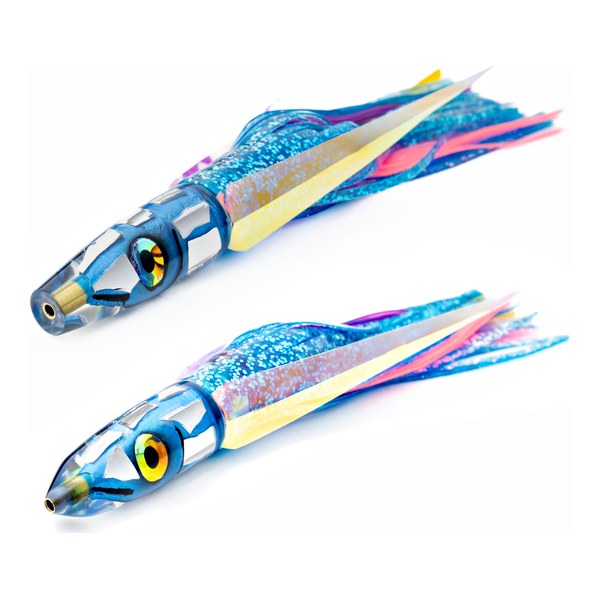
When setting up a spread and selecting lures you must first know what is the result you're after. Are you trying to catch anything because you're afraid of not catching, or is there a target fish - a fish that is currently in season?
This is the question nobody asks before they leave the dock. Most guys spend hours rigging lures, checking tackle, loading the cooler - but they never stop to think about what they're actually trying to accomplish once they get out there. They're preparing for a trip, not planning a hunt.
The guys who catch fish consistently aren't luckier than you. They're more intentional. They know what's running, what those fish eat, where they hold, what conditions they like. Their spread isn't random - every lure is doing a job. When you troll with intention you start noticing patterns. You learn why certain days produce and others don't. That education compounds over years until you're the guy other people wonder about.
If you're just starting out, your target is probably to catch anything. There's no shame in that. Everyone starts there. The goal right now isn't to specialize - it's to learn how a spread works, where your bites come from, and what each position does. Once you have that foundation you can adjust for ahi season or marlin or whatever you're chasing. But first you need a baseline that catches fish.
What follows is a spread that covers multiple species without overcomplicating things. Five lines, three positions. Simple enough to run without a crew, effective enough to fill a cooler.
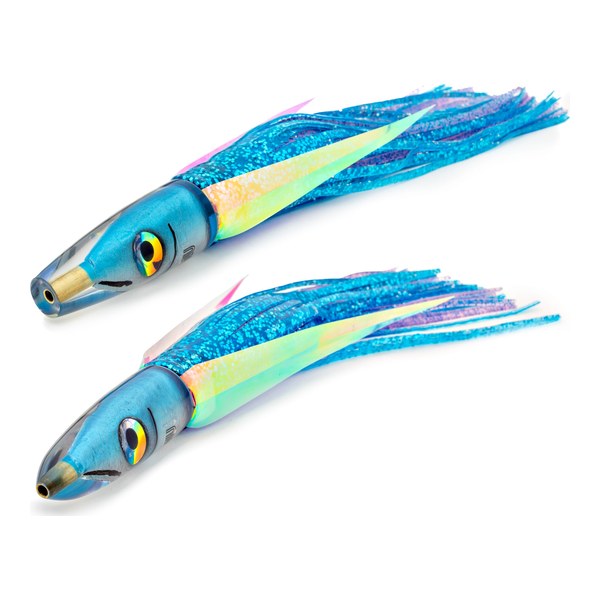
Your corner lines run 100 to 120 feet back. This is where you put your smallest lures - a pair of 5 or 6 inch heads. For colors, ice blue on one side and either pink or black/silver on the other.
There's a reason the smallest lures go in the closest position and it's not arbitrary. Aku and mahi mahi are not boat-shy. They'll come right up into your prop wash to eat. If you hook one of those species on a corner lure you can clear two lines to land it instead of four. That efficiency matters more than most beginners realize. Nothing kills a day faster than watching a hooked fish swim under your spread while you scramble to clear six lines that didn't need to be there.
Ice blue in the corner is a confidence pick. It reads clean in the water, it moves well at most trolling speeds, and it works on a wide range of species. The pink or black/silver on the other side gives you contrast. You're not just covering different positions - you're covering different visual profiles. Some days fish want flash. Some days they want a softer look. Running contrast in your corners means you're gathering information every time you get a strike.
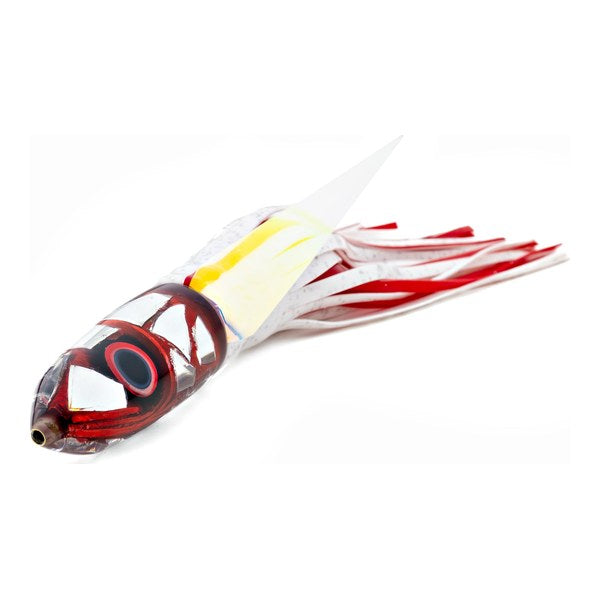
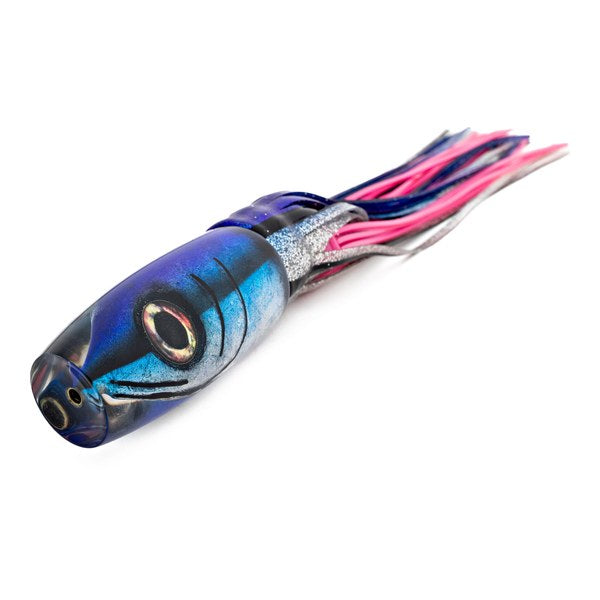
Your outrigger lines go 200 to 220 feet back. This is where you step up to 7 inch lures. Run one bullet head and one invert. One of these should be a milky color, and whichever color - pink or black/silver - you didn't run in your corners goes here.
The step up in lure size at the rigger position isn't random. Larger lures read differently in the water at distance. They push more water, create more turbulence, and pull the attention of bigger fish. The ahi and larger mahi that won't come close to the boat will come for something at 200 feet that looks like it belongs out there.
Running one bullet and one invert in the rigger position gives you two different swimming actions on the same side of the boat. A bullet head tracks straight and fast. An invert has more wobble and surface action. You're not doubling up - you're covering two different presentations at the same distance. When you get a rigger bite you'll start to learn which action those fish preferred that day.
The milky color in the rigger position is deliberate. Milky lures have a translucence that most solid colors don't. In clear Hawaiian water at 200 feet back they catch light differently and they read well in both flat calm and choppy conditions. Pair it with the pink or black/silver you held back from your corners and you've got contrast at every level of the spread.
The shotgun position - your deep center line - runs way back. 300 to 350 feet. This is your experimental slot.
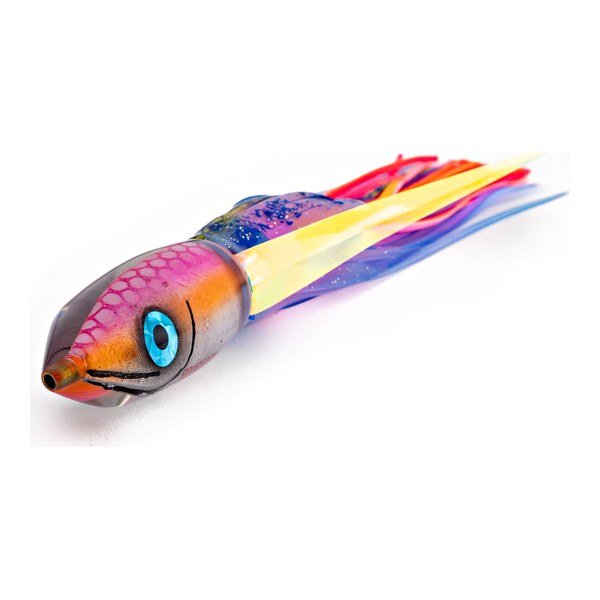
A 7 inch blunt bullet is a good default here, but you can run a regular 6 or 7 inch lure. Lots of colors work in the shotgun position so pick the one you're excited to try. There's real logic to that. The shotgun is far enough back that it's fishing a completely different piece of water than your other lines. Fish that got spooked by the boat, fish that followed one of your other lures and turned off, fish that are just running deep - the shotgun is for all of them. It's your swing for something different.
At 300 to 350 feet you're also in territory that mainland anglers simply don't fish. The articles ranking on Google right now will tell you 150 to 250 feet for a long position. That might be fine in the Gulf. Out here you're leaving fish behind if that's your ceiling. Hawaii's clear water means your boat pressure extends further back than you think. The shotgun position at 350 feet is fishing clean water. That matters.
If you're getting follows and no bites, your lures are too close together or too similar in profile. Spread your positions and add contrast. If you're not getting any surface action at all, slow down. Most beginners troll too fast. Hawaii captains run 6.5 to 8 knots depending on conditions. Drop a knot and watch what happens. If you're still marking nothing after an hour, move. A dead spread over dead water is just burning fuel. Find the birds, find the debris, find the temperature break - then set your spread again with intention.
Tsutomu Lures are built and rigged in Hawaii for Worldwide Fishing. Browse the full lineup at [tsutomulures.com]
Comments will be approved before showing up.

Some of my best days started as busted ahi plans. Here is how I find and work floating rubbish in Hawaii, from hunting speed between piles to the six inch lures and Aku Bones that go in the water first when I break down.

I run a 9-inch spread during ahi season, but the 7-inch and 6-inch lures earn their spot in the box for everything else. Here is how I use each size, when I reach for the Ali’i heavy series in rough water, and why I pull them all out once that 3-month ahi window opens.

We sell or give away the best cuts of every ahi, and the fisherman keeps the rest. Here is how I smoke the head, why the meat around the eyes smells like crab, and how what is left turns into a really good head soup.

Join the Tsutomu crew for early drop alerts, fish reports, and tips from the water.
Drops sell out. Add your number and get a text on every drop and restock before Instagram or email finds out.
By providing your phone number, you agree to receive promotional and marketing messages, notifications, and customer service communications from Tsutomu Lures. Message and data rates may apply. Consent is not a condition of purchase. Message frequency varies. Text HELP for help. Text STOP to cancel. See terms, see Privacy Policy.
Here’s 15% off your first order. Tap the code to copy it, or shop now and it applies at checkout automatically.