One of the questions I get at the shop all the time is how far back to set your lures. I can give you my numbers, and I will, but the honest answer is that every boat bites differently. Deep V hulls, flatter hulls, diesel leg, diesel shaft, single or twin outboards, they all put a different sound into the water, and even the same boat can change where it bites if you change something on it. The real skill is paying attention to where your bites come and adjusting your spread to match.
I went deeper on the full setup in my post on how to set a trolling spread, so here is the short version. My two long lines off the riggers go 320 feet back. The corners run at about 200 feet. The flatline I just eyeball so it sits under the loop of the other lines where it cannot tangle anything. I treat it almost like a bonus line, a spot to watch how a new lure swims.
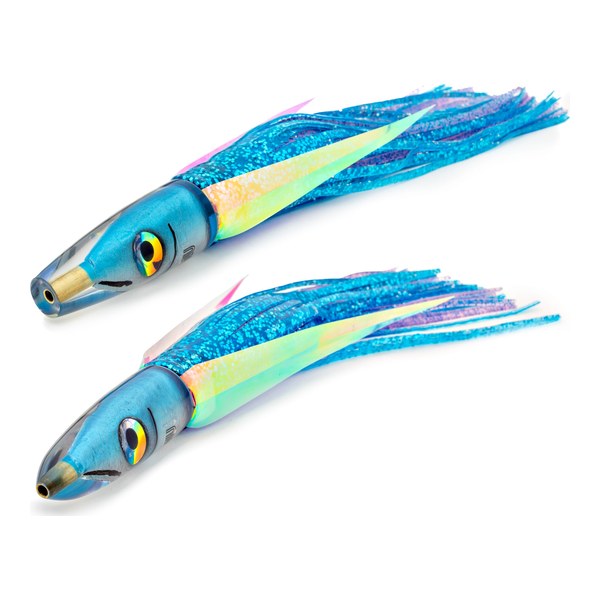
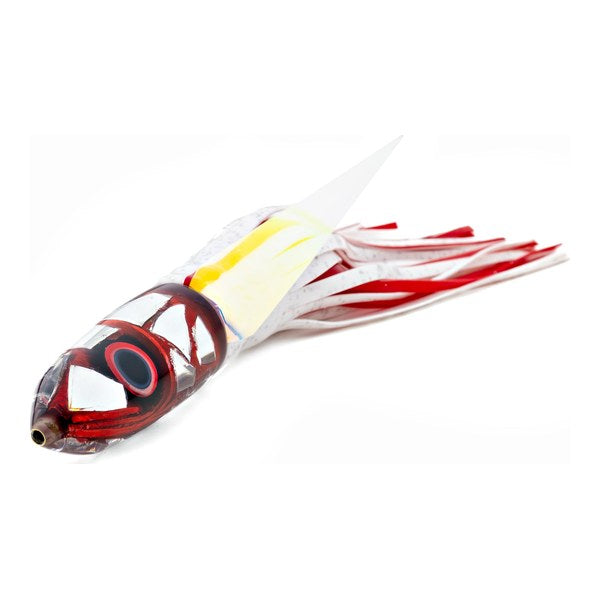
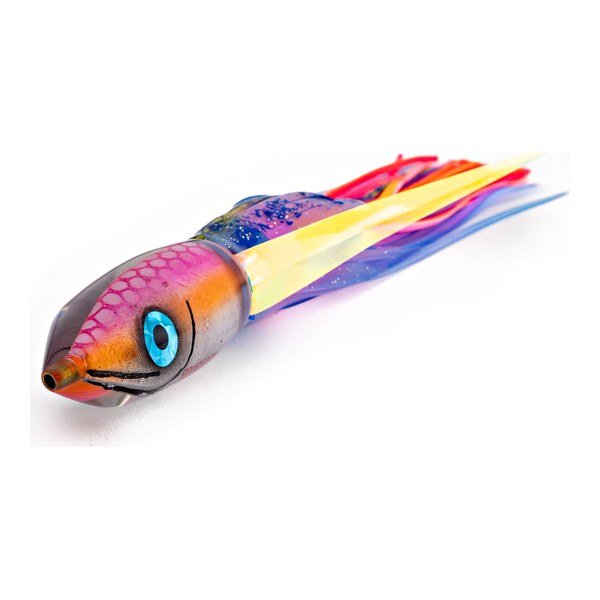
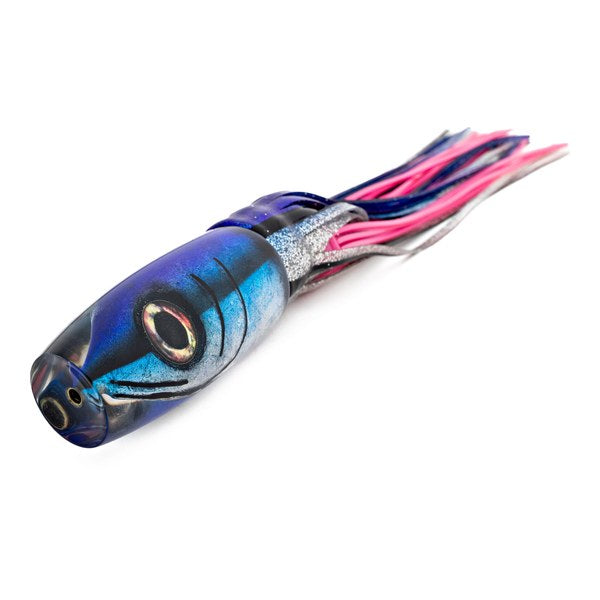
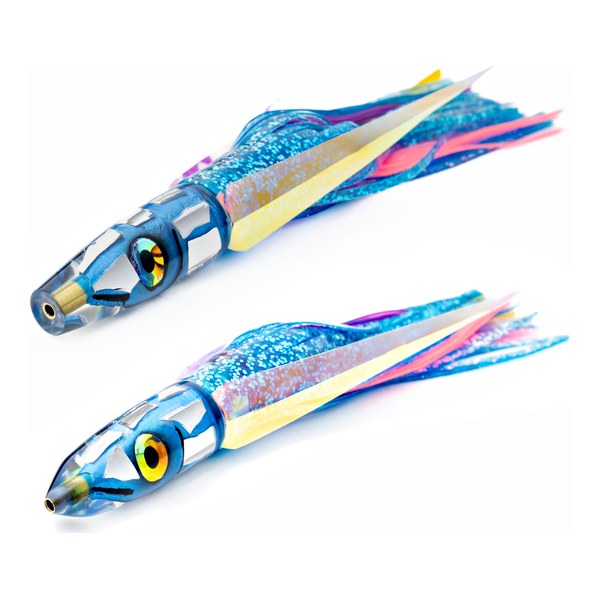
I measure the long lines out to 320 feet and put a marker on the line, either a sharpie mark, a piece of floss, or a rubber band, so the two long lures are even every time. I also like those two lures to be the same lure or a real similar lure in size and weight. I typically run a Moke bullet and a Moke invert, or an H1 bullet and an H1 invert, or two H1 bullets. When the boat turns, matched lures drop and rise at about the same rate, so a light lure never gets blown across and into the heavy one. A heavy invert on one side and a light 7 inch lure on the other, with the wind pushing hard, is how you get tangled. A lot of my friends run the exact same style of lure in just different colors for the same reason. The rougher it is, the more you want to keep that structure. I broke down how the head shapes differ in Bullet vs Invert.
Five or six lures is the maximum we pull on our boat, and if you are starting out, run four poles. I always tell people, if you have six poles, sell one and get yourself a good pair of binoculars. When the bite comes, your crew has to clear every one of those lines and still have gas left to fight the fish.
When we first got our boat it had an older style leg on the diesel, and it was making some kind of vibration. We were not getting many ahi bites, and the bites we did get all came on the long center. One of the older guys told my cousin, the ahi no like the sound of your boat, you got to let your lures out further. So instead of chasing the noise, we ran both outriggers long, around 340 feet back, with the center brought in as a short flat line. Two lures way out beat one.
Then that leg blew out, we put a new leg on, and everything changed. The corners and the flatline started biting, so we went from running everything as far back as we could to bringing the whole spread in closer.
Tuna are finicky about sound. Most other fish will bite wherever you put the lures, but ahi will shy off a vibration. One really good charter captain here on Oahu, known for catching a lot of tuna, once had a railing job done and made the installer line up the rail so the bolt fit straight through the hole without tweaking it, because that twist could carry a vibration into the rail. You do not have to solve the noise. You just have to find where your boat bites.
The method is simple. Take note of where your bites come, then move lures toward that spot.
If your bites always come long, run both riggers long, 340 feet or so, and run your corners as far back as you can without tangling the riggers.
If your corners start biting, squeeze the pattern in. When our corners started producing at 200 feet, we sucked the corners in, brought the riggers in too, and compressed the whole spread so more of our lures sat in the zone that was biting. Squeeze things in 50 feet, 80 feet, whatever, and see if the fish will bite even closer to the boat. On a small boat, closer riggers also mean less slop of line dragging in the water, so fewer tangles and better lure action without that big loop dropping off the rigger.
Conditions matter too. When it is calm you can choke everything up and go a little faster. When it is rough, let it out further and go slower. And the baseline is always there. If I go a trip or two with a shrunken down spread and I am not getting bit, or if it turns really rough, I go right back to my 320 and 200 starting spread.
When you are cranking a fish back and that marker comes up, you know the fish is 320 feet away, or 200 feet away, right now. That is when I tell my guys to get the gaffs ready and get their gloves on. It takes the guessing out of the end game.
On one trip this past season we set the riggers at 220, the corners at 120, and kept the center long at 320, and adjusted from there. You figure your leader is 15 feet and there is the drop of the line too, so the marker is a starting point, not gospel. The bite was slow and we saw only a couple of boats hook up, so we stretched our zone wider than normal. Around midday I spotted a boat hooked up a couple miles up sea of us. We ran up sea, got about five degrees above him, and as soon as we turned back down sea the center went off with one of the biggest ahi we had seen in a while.
Paying attention and adjusting is the whole game. Watch where the bites happen and where your own boat likes to bite, move your lures to match, and you will get more out of the same spread you are pulling right now.
Comments will be approved before showing up.

Some of my best days started as busted ahi plans. Here is how I find and work floating rubbish in Hawaii, from hunting speed between piles to the six inch lures and Aku Bones that go in the water first when I break down.

I run a 9-inch spread during ahi season, but the 7-inch and 6-inch lures earn their spot in the box for everything else. Here is how I use each size, when I reach for the Ali’i heavy series in rough water, and why I pull them all out once that 3-month ahi window opens.

We sell or give away the best cuts of every ahi, and the fisherman keeps the rest. Here is how I smoke the head, why the meat around the eyes smells like crab, and how what is left turns into a really good head soup.

Join the Tsutomu crew for early drop alerts, fish reports, and tips from the water.
Drops sell out. Add your number and get a text on every drop and restock before Instagram or email finds out.
By providing your phone number, you agree to receive promotional and marketing messages, notifications, and customer service communications from Tsutomu Lures. Message and data rates may apply. Consent is not a condition of purchase. Message frequency varies. Text HELP for help. Text STOP to cancel. See terms, see Privacy Policy.
Here’s 15% off your first order. Tap the code to copy it, or shop now and it applies at checkout automatically.