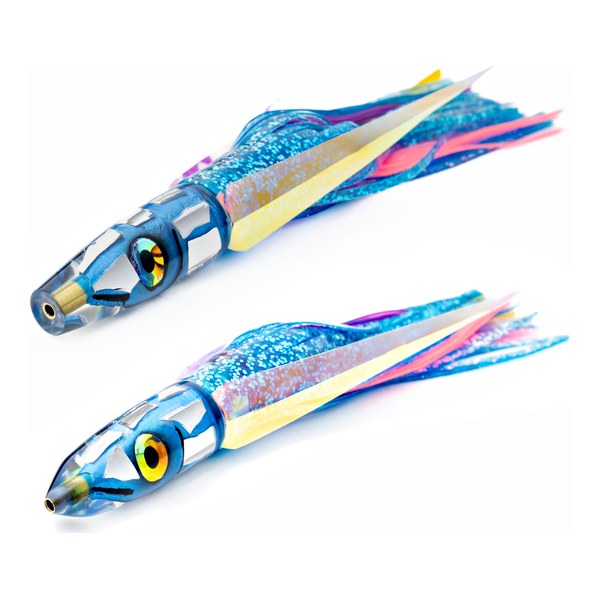
Pick the wrong shape for your conditions and you'll drag plastic all day. Pick the right one and you'll understand why captains obsess over this stuff.
Here's what each head shape actually does.
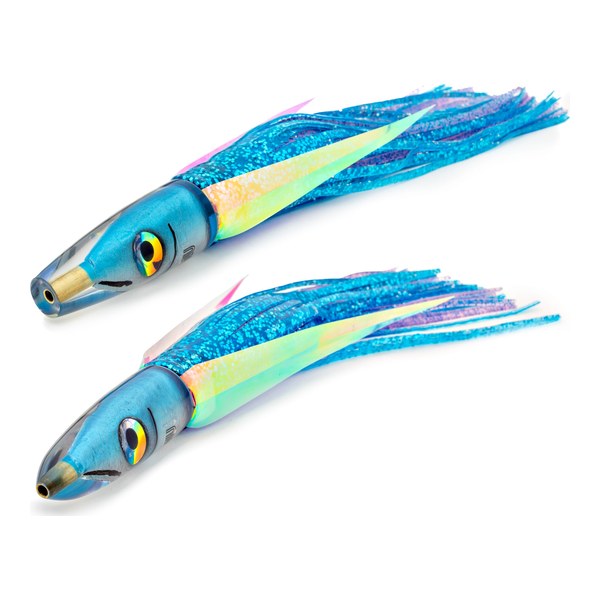
The Bullet
Shape: Pointed nose, tapered body
Action: Runs just below the surface, then rises to skitter and smoke across the top. Straight tracking with occasional breaks.
Best conditions: Works in everything. Calm water, rough water, any trolling speed from 6-12 knots.
Best positions: Any position in the spread. The most versatile head shape.
What it catches: Everything. Ahi, marlin, mahi, ono. The bullet is the workhorse.
Why it works: The pointed nose sheds water cleanly and mimics a fleeing baitfish. The smoke trail it leaves calls fish from a distance. When it breaks the surface, it looks like something trying to escape.
Not All Bullets Are the Same
Mass-produced bullets come out of a mold and go straight in a bag. Handmade bullets are different.
Each head gets tuned by hand - the nose angle, the weight distribution, the balance point. Small adjustments to these change how the lure tracks, how quickly it recovers after a wave hits it, and how it sits in the water at different speeds.
A bullet that's nose-heavy dives too much. Tail-heavy and it won't smoke right. The sweet spot is a lure that runs true, breaks the surface naturally, and snaps back into action no matter what position you put it in.
This is why two bullets that look identical can run completely differently. The tuning is invisible but it's everything. It's important to pay attention to this. Over time you will learn how each of your lures run and remember how to use them best.
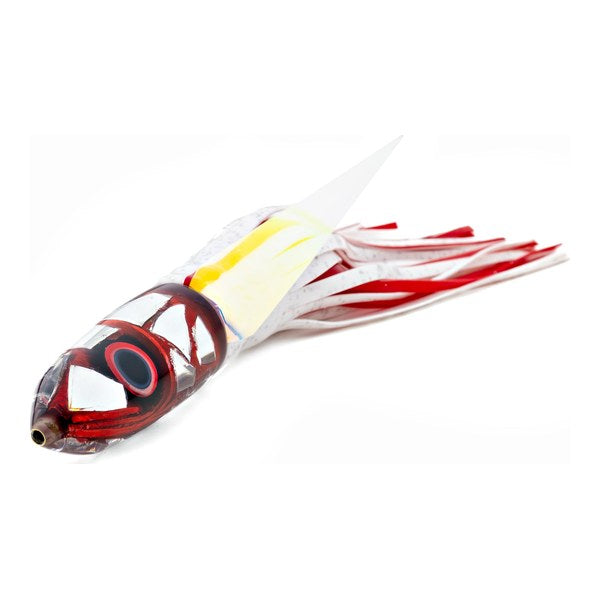
The Blunt Bullet
Shape: Short, fat-faced version of the bullet
Action: Extra skittering and skating action, even in calm water.
Best conditions: Calm seas, small boats with short outriggers, fishing off the rod tip.
Best positions: Short corner, anywhere with a lower line angle.
What it catches: Same versatility as the bullet, but with more surface action.
Why it works: The blunter face creates more resistance, which translates to more action even when trolling conditions aren't ideal. Small boat anglers love these because they compensate for shorter outrigger spreads by adding extra action that smaller, shorter riggers do not have like the long riggers of larger boats.
How the Blunt Bullet Solves a Real Problem
Standard bullets need a steep line angle to perform. That angle comes from tall outriggers or running the lure way back. On smaller boats with short outriggers - or when you're fishing off the rod tip - you don't have that angle.
The blunt bullet was designed for this. The shorter, fatter face catches more water and creates surface action even at low line angles. It skitters and skates when a standard bullet would just swim flat.
This is why the blunt bullet became a favorite for small boat anglers. Same fish-catching ability as a traditional bullet, but it actually works in real small-boat conditions.
The tradeoff: blunt bullets create more drag than standard bullets. At higher speeds they can blow out. Keep them at 7-9 knots and they'll outperform in calm water.
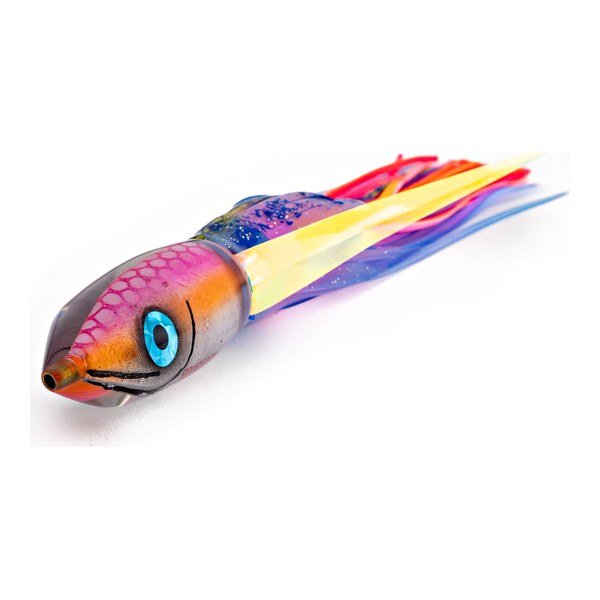
The Plunger (Cupped Face or Invert)
Shape: Angled or cupped face, cylindrical body
Action: Dives, pops, and throws water. More aggressive than a bullet. Creates a loud "chug" sound.
Best conditions: Rougher water, when fish are active, or when you need to trigger a reaction strike.
Best positions: Short corner, long corner. Anywhere you want disruption.
What it catches: Marlin love plungers. The aggressive action triggers their predator instinct.
Why it works: The cupped face grabs water and throws it, creating noise and bubble trails. In rough conditions, plungers keep working when other shapes lose their action.
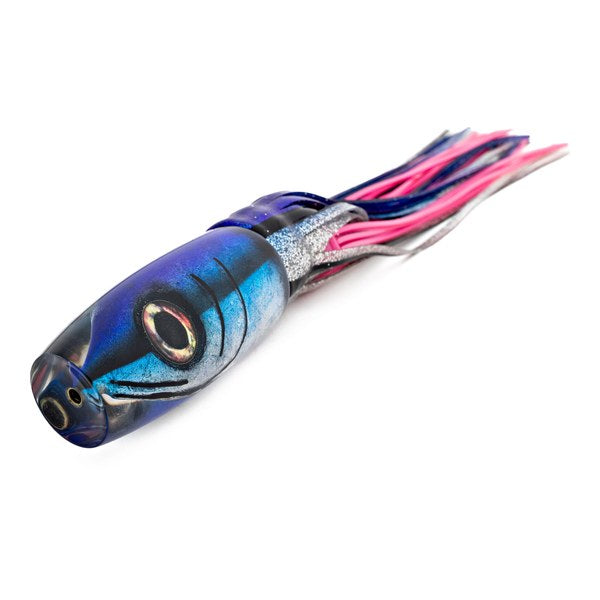
The Jet
Shape: Holes or tubes running through the head
Action: Shoots a stream of water and bubbles behind it. Runs deeper than bullets or plungers.
Best conditions: All water conditions, high-speed trolling (9 + knots), targeting fish holding deeper.
Best positions: Long rigger, Long Center. Let it run far back.
What it catches: Favorite for big Ahi, marlin and everything in between.
Why it works: The water channeling through the head creates a unique bubble signature. At high speeds, jets track true when other shapes spin out.
The Slant Face
Shape: Angled flat face
Action: Erratic side-to-side swimming, surface splashing
Best conditions: Moderate seas, when you want a lure that hunts and weaves.
Best positions: Corner positions where the erratic action stands out.
What it catches: Marlin, mahi. The unpredictable action triggers strikes from curious fish.
Why it works: The angled face catches water unevenly, creating that wounded baitfish look that predators can't resist.
How to Choose
Start with conditions:
- Calm water → Bullets, blunt bullets, jets
- Rough water → Plungers, cupped faces
- High speed → Jets, heavy bullets
Then consider species:
- Targeting everything → Bullets
- Specifically marlin → Plungers, slant faces
- High-speed wahoo → Jets
Then build your spread:
A balanced spread mixes head shapes. You want some straight runners, some aggressive poppers, and some wildcards. Different actions at different distances create a school effect that raises more fish.
Example spread:
- Short corner: Plunger or blunt bullet (action close to the boat)
- Long corner: Bullet (reliable producer)
- Short rigger: Bullet or slant face (mix it up)
- Long rigger: Bullet or jet (let it swim back there)
- Shotgun: Your best fish catcher
The Shape is Just the Start
Head shape gets the lure in the water correctly. After that, it's about weight, size, skirt color, and running position.
But if you don't get the head shape right for your conditions, nothing else matters. A plunger in dead calm water won't save you. A light bullet at 12 knots will blow out.
Match the head to the conditions first. Then dial in everything else.
Ready to build your spread?