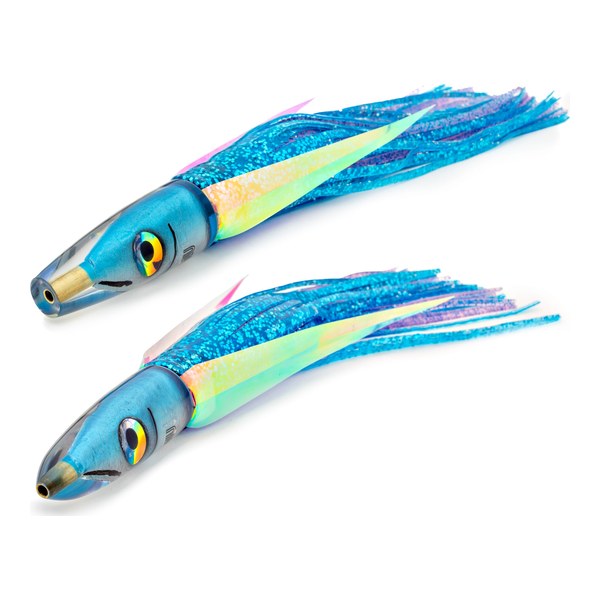
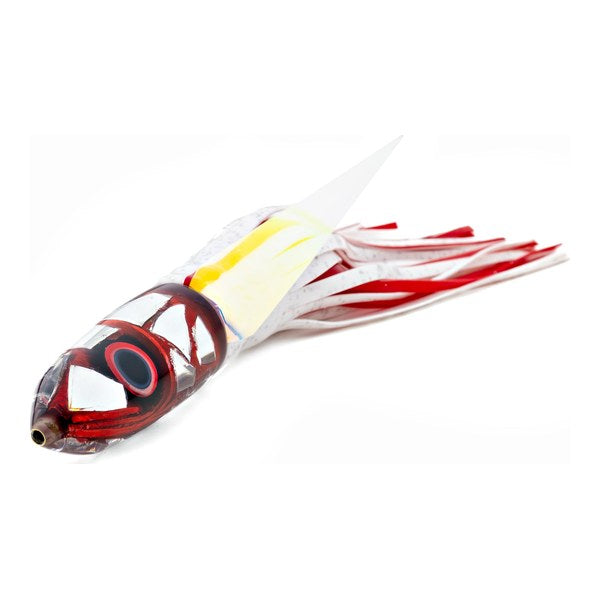
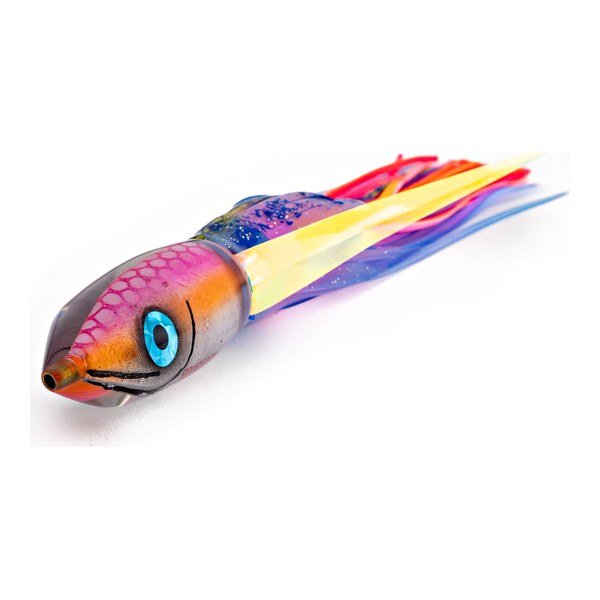
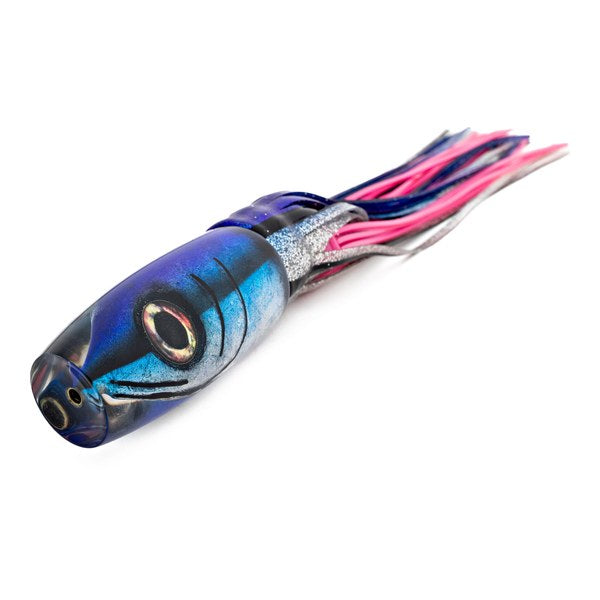
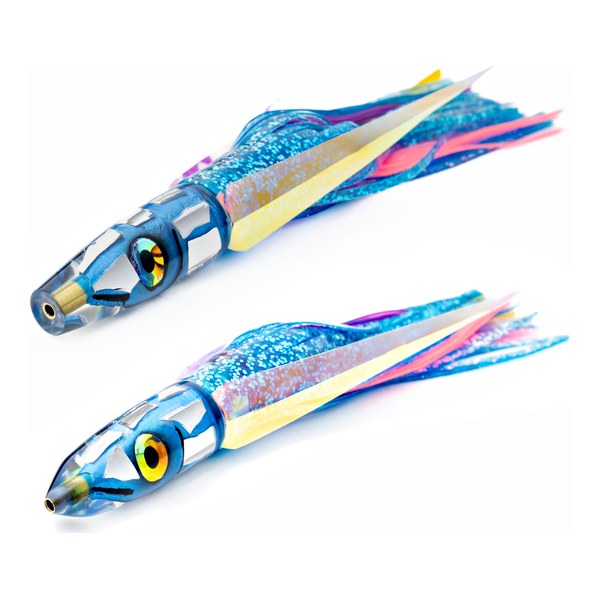
Ahi don't behave the same way year-round. Water temperature, bait migration, and current patterns all affect what's working on any given day. Here's what we've learned about matching lures to conditions in Hawaiian waters.
Winter (December - February): Deep and Slow
Water temps drop to 74-76°F. Ahi push deeper and feed less aggressively.
What works:
- Smaller heads (7") with darker skirts
- Slower trolling speeds (6-7 knots)
- Natural color patterns - purples, blues, root beer
This is when finesse matters. The bite windows are shorter, so you need lures that look right even at slower speeds. Light tackle options shine in winter conditions.
Spring (March - May): The Transition
Water warms to 76-78°F. Ahi start moving shallower and feeding more actively as bait comes in.
What works:
- Mid-size heads (7-9")
- Brighter skirts start producing - bleeding patterns, pink/white combos
- Medium trolling speeds (7-8 knots)
Spring is variable. Check water color and temp daily. Green water days, go darker. Blue water, go brighter.
Summer (June - August): Peak Season
Water hits 78-82°F. Ahi are shallow, aggressive, and hungry. This is when the big fish show up.
What works:
- Larger heads (9"+) with aggressive action
- Bright, flashy skirts - lumo, chrome, hot pink
- Faster trolling speeds (8-9 knots)
- Multiple lure spreads - they're competing for food
Summer is when the Ahi Fever sets earn their name. Run them in the short corner and rigger positions.
Fall (September - November): The Second Push
Water temps hold at 77-80°F. Another strong feeding period before winter.
What works:
- Similar to summer but scale back slightly
- 7-9" heads
- Mix of bright and natural patterns
- Watch the moon phase - full moon nights mean slower morning bites
Reading the Conditions
Season is just the starting point. Adjust based on:
Water clarity:
- Clear/blue water → bright, flashy lures
- Green/murky water → darker, natural patterns with more action
Bait presence:
- Lots of flying fish → match the size, go with blues and whites
- Squid around → purples, pinks, lumo at night
Current:
- Strong current → smaller lures, slower speed
- Slack water → bigger lures, more action
The Spread That Covers Everything
If you're not sure what conditions you'll find:
1. Short corner: Bright 9" lure (your confidence bait)
2. Long corner: Natural 7" lure
3. Short rigger: Mid-size with action
4. Long rigger: Different color than your corners
This approach covers your bases while you read the water. Once you see what's working, adjust. For exact positioning and distances, check out our trolling spread guide
Comments will be approved before showing up.

I walk you through how we build every lure at our shop in Hawaii, from the balanced lead insert and the star paper inlay to five passes of paint and the tuning box. It is the same process I showed on camera with the H-1 fish head and the 9 inch Ice Blue Moke Bullet.

The blunt bullet is a shorter, fatter bullet head we designed to skitter along the surface. Here is when I run it, why I put two skirts on it instead of three, and the 7 inch skirt trick that squeezes more action out of it on a small boat.

I get asked all the time whether the trailer hook needs to hide inside the skirt. It does not, and there is a good reason: marlin swat the back of the lure first, and a hanging hook that flops at trolling speed looks like a fish tail. I also cover when to size up from 9/0 to 11/0 and 10/0 hooks based on skirt bulk.

Join the Tsutomu crew for early drop alerts, fish reports, and tips from the water.
Drops sell out. Add your number and get a text on every drop and restock before Instagram or email finds out.
By providing your phone number, you agree to receive promotional and marketing messages, notifications, and customer service communications from Tsutomu Lures. Message and data rates may apply. Consent is not a condition of purchase. Message frequency varies. Text HELP for help. Text STOP to cancel. See terms, see Privacy Policy.
Here’s 15% off your first order. Tap the code to copy it, or shop now and it applies at checkout automatically.